Anil Ambani-controlled Reliance Natural Resources plans to enter cement manufacturing and shipping activities with an investment of Rs 12,000 crore.
"We will invest Rs 10,000 crore in cement business and Rs 2,000 crore in shipping," RNRL Vice-Chairman Anil Singhvi said on the sidelines of the company's annual general meeting here today.
"Our foray into cement and shipping will take 3-4 years period," Singhvi said.
Earlier at the meeting, RNRL Chairman Anil Ambani said that "we are actively considering entering into cement manufacturing with 20-million tonnes capacity".
For supporting its ambitious cement business, RNRL is looking to run a shipping service. It will help the company in transporting raw materials and finished products. At present, RNRL is engaged in sourcing, supply and transportation of various fuels along with exploration, production and distribution of gas.
"We will foray into shipping business with six ships to start with. It will operate between Indonesia and Krishnapatnam (in Andhra Pradesh), carrying coal from Indonesia," Ambani said.
"We re-positioned RNRL as a complete fuel management company, covering exploration, development and production, sourcing and supply, transportation and distribution activities," he said.
"We are now equipped not just to meet the fuel requirements of our group companies but of a wider market."
Friday, October 31, 2008


ABG Shipyard bags Rs 2,377 cr order for rigs
Private sector ship builder ABG Shipyard Ltd on Friday said that it has bagged a Rs 2,377.41 crore (480 million US dollar) order for building two rigs from Essar Oilfields Services Ltd, Mauritius.
These self-elevating jackup rigs would have the operating capacity of up to 350 ft. Water Depth and a drilling depth capacity of 30,000 ft, ABG Shipyard said in a filing to the Bombay Stock Exchange.
These rigs are designed for year-- round Gulf of Mexico and 50-year return period North Sea environment in accordance with American Bureau of Shipping (ABS) assessment criteria, it said.
The innovative features of this design include increased storm criteria, extended reach cantilever, lightweight, an efficient drilling package, and F&G's Advanced Rack Chock System.
The rigs also includes single point discharge system and high preload system, it added.
The company is a wholly owned subsidiary of Essar Shipping & Logistics Ltd with its main focus on offshore and onshore drilling activities.
Shares of the company closed at Rs 117, up 1.39 per cent from the previous close on the BSE.
These self-elevating jackup rigs would have the operating capacity of up to 350 ft. Water Depth and a drilling depth capacity of 30,000 ft, ABG Shipyard said in a filing to the Bombay Stock Exchange.
These rigs are designed for year-- round Gulf of Mexico and 50-year return period North Sea environment in accordance with American Bureau of Shipping (ABS) assessment criteria, it said.
The innovative features of this design include increased storm criteria, extended reach cantilever, lightweight, an efficient drilling package, and F&G's Advanced Rack Chock System.
The rigs also includes single point discharge system and high preload system, it added.
The company is a wholly owned subsidiary of Essar Shipping & Logistics Ltd with its main focus on offshore and onshore drilling activities.
Shares of the company closed at Rs 117, up 1.39 per cent from the previous close on the BSE.
Steel cos give mixed reaction about export duty reduction
Government's decision to cut export duty by 15 per cent on long steel products, mainly used in the construction sector, got a mixed response from the steel industry.
While a section of steel producers feel the move would not help the industry much as it has come at a time when demand and prices of the alloy have nosedived in global market due to financial recession, others contend it saying it would open up avenues for foreign shipments.
"The duty roll back would not have a substantial impact, as volume of exports of long products from India is minimal," SAIL Chairman S K Roongta said.
Nevertheless, he termed the move as a "right one", saying it would provide a little respite to the industry, which can think of exporting some quantities.
Of India's total steel exports of around 7 million tonne in the last fiscal, long products contributed just over 25 per cent.
Industry watchers, however, said the duty roll back would to some extent benefit producers like SAIL, RINL and Tata Steel, which account for 30 per cent of the total market in the organised sector.
"It is a welcome move. We had made a request for this to the government keeping in mind the unprecedented situation in the world, which has also affected the Indian steel sector," RINL CMD P K Bishnoi said.
He, however, added that much more needs to be done by the government to give a fillip to the domestic steel industry, which is passing through toughest of the times due to slump in demand and falling prices.
While a section of steel producers feel the move would not help the industry much as it has come at a time when demand and prices of the alloy have nosedived in global market due to financial recession, others contend it saying it would open up avenues for foreign shipments.
"The duty roll back would not have a substantial impact, as volume of exports of long products from India is minimal," SAIL Chairman S K Roongta said.
Nevertheless, he termed the move as a "right one", saying it would provide a little respite to the industry, which can think of exporting some quantities.
Of India's total steel exports of around 7 million tonne in the last fiscal, long products contributed just over 25 per cent.
Industry watchers, however, said the duty roll back would to some extent benefit producers like SAIL, RINL and Tata Steel, which account for 30 per cent of the total market in the organised sector.
"It is a welcome move. We had made a request for this to the government keeping in mind the unprecedented situation in the world, which has also affected the Indian steel sector," RINL CMD P K Bishnoi said.
He, however, added that much more needs to be done by the government to give a fillip to the domestic steel industry, which is passing through toughest of the times due to slump in demand and falling prices.
India's economic growth prospects remain strong: S&P
: The international credit rating agency Standard & Poor's on Friday said that India's growth prospects would remain strong on account of buoyancy in its investment climate and good government debt market, notwithstanding the global financial meltdown.
"Given the buoyant private and public investments with some progress in economic reforms, India's business environment is likely to improve in the years ahead, notwithstanding the current dislocations in global credit markets," S&P said in a statement on Friday.
Reaffirming the investment grade rating (BBB-) for India, the rating agency said: "It reflects India's strong economic growth prospects and its deep government debt bond, which helps accommodate its weak fiscal position."
S&P retained its 'BBB-' long-term and 'A-3' short-term sovereign credit ratings on India. The outlook on the long-term rating also remains stable.
These ratings suggest that India can meet its financial obligations in both the short and long run debts.
Earlier in July, global credit rating agency Fitch downgraded India's credit outlook from stable to negative citing deteriorating fiscal position of the government on account of increasing oil and fertiliser subsidy bill.
"Its (India's) economic growth has benefited from higher consumption and private investment, due to a growing middle class and favourable demographics," said S&P's credit analyst Takahira Ogawa in the note.
"Given the buoyant private and public investments with some progress in economic reforms, India's business environment is likely to improve in the years ahead, notwithstanding the current dislocations in global credit markets," S&P said in a statement on Friday.
Reaffirming the investment grade rating (BBB-) for India, the rating agency said: "It reflects India's strong economic growth prospects and its deep government debt bond, which helps accommodate its weak fiscal position."
S&P retained its 'BBB-' long-term and 'A-3' short-term sovereign credit ratings on India. The outlook on the long-term rating also remains stable.
These ratings suggest that India can meet its financial obligations in both the short and long run debts.
Earlier in July, global credit rating agency Fitch downgraded India's credit outlook from stable to negative citing deteriorating fiscal position of the government on account of increasing oil and fertiliser subsidy bill.
"Its (India's) economic growth has benefited from higher consumption and private investment, due to a growing middle class and favourable demographics," said S&P's credit analyst Takahira Ogawa in the note.
FIIs invests Rs 1,237 cr in equities
Reversing their selling spree Foreign Institutional Investors on Friday invested in equities worth Rs 1,237.21 crore, amid the barometer i
ndex gaining over 740 points.
FIIs invested in shares worth Rs 4,129.22 crore and sold stocks valued Rs 2,892.01 crore, resulting in a net investment of Rs 1,237.21 crore, as per provisional data available on the BSE.
According to information available on Sebi website, FIIs offloaded shares valued Rs 848.59 crore during the week.
However, domestic institutional investors shed stocks worth Rs 116.10 crore on the bourses.
Among other categories, brokers sold shares worth Rs 145.66 crore on behalf of their clients and retail investors and non-resident Indian entities sold stocks worth Rs 1.44 crore.
Meanwhile, proprietors purchased equities worth Rs 29.22 crore on the day's trade.
The Bombay Stock Exchange benchmark index Sensex settled at 9,788.06 points, up 743.55 points or 8.22 per cent.
ndex gaining over 740 points.
FIIs invested in shares worth Rs 4,129.22 crore and sold stocks valued Rs 2,892.01 crore, resulting in a net investment of Rs 1,237.21 crore, as per provisional data available on the BSE.
According to information available on Sebi website, FIIs offloaded shares valued Rs 848.59 crore during the week.
However, domestic institutional investors shed stocks worth Rs 116.10 crore on the bourses.
Among other categories, brokers sold shares worth Rs 145.66 crore on behalf of their clients and retail investors and non-resident Indian entities sold stocks worth Rs 1.44 crore.
Meanwhile, proprietors purchased equities worth Rs 29.22 crore on the day's trade.
The Bombay Stock Exchange benchmark index Sensex settled at 9,788.06 points, up 743.55 points or 8.22 per cent.
Capex plan for 2nd half of FY09 Rs 970 crore: Suzlon
Suzlon Energy has announced its Q2FY09 numbers. Its Q2 standalone net profit stood at Rs 16.98 crore as against Rs 355 crore.
The company's standalone revenues stood at Rs 2,226.25 crore versus Rs 1,687.46 crore.
Suzlon Energy has reported (excluding Hansen and REpower) consolidated net loss of Rs 130.5 crore versus Rs 374.80 crore. Its revenues went up at Rs 4,181 crore versus Rs 3,137 .45 crore.
Key takeaways from Suzlon Energy's Press release:
Order book at Rs 14052 crore.
Capex plan for 2nd half of FY09 is Rs 970 crore.
Its MTM loss on Zero coupon bonds and forward contracts stood at Rs 230 crore versus gain of Rs 26 crore.
MTM is notional as it is due to rupee depreciation, so adjusted for the same; net profit stood at Rs 66.72 crore versus Rs 348 crore.
Its total income Rs 2264.66 crore versus Rs 1718.73 crore on YoY basis.
Its debt is of Rs 1200 crore.
65% - 70% is forex loan which is at libor + 400 bps
Rest is rupee loan which is at 12%.
Have Rs 400 crore equity part already from IDFC PE.
No cancellations till now post edison.
Have completed root cause analysis; V3 turbines working well.
Debt: suzlon level 8900 crore & group level 8400 crore.
Working capital: flat.
Quiet a few discussions on; order book robust – near future strong.
Debt costs gone up; working capital and forex gone up
India and German rules – German rule: cannot consolidate till we get domination; cannot do selective consolidation – so left out both Hansen and repower
236 MW in India
1200 MW US
500 MW China
184 MW Australia
357 MW Europe and rest of world
India 236 MW; total at 2500 MW
Stiffness not right; had to add one more layer to make it durable.
Retrofit programme - 90% to be completed by March.
1500 mw in h2 and 1000 mw in FY10.
The company's standalone revenues stood at Rs 2,226.25 crore versus Rs 1,687.46 crore.
Suzlon Energy has reported (excluding Hansen and REpower) consolidated net loss of Rs 130.5 crore versus Rs 374.80 crore. Its revenues went up at Rs 4,181 crore versus Rs 3,137 .45 crore.
Key takeaways from Suzlon Energy's Press release:
Order book at Rs 14052 crore.
Capex plan for 2nd half of FY09 is Rs 970 crore.
Its MTM loss on Zero coupon bonds and forward contracts stood at Rs 230 crore versus gain of Rs 26 crore.
MTM is notional as it is due to rupee depreciation, so adjusted for the same; net profit stood at Rs 66.72 crore versus Rs 348 crore.
Its total income Rs 2264.66 crore versus Rs 1718.73 crore on YoY basis.
Its debt is of Rs 1200 crore.
65% - 70% is forex loan which is at libor + 400 bps
Rest is rupee loan which is at 12%.
Have Rs 400 crore equity part already from IDFC PE.
No cancellations till now post edison.
Have completed root cause analysis; V3 turbines working well.
Debt: suzlon level 8900 crore & group level 8400 crore.
Working capital: flat.
Quiet a few discussions on; order book robust – near future strong.
Debt costs gone up; working capital and forex gone up
India and German rules – German rule: cannot consolidate till we get domination; cannot do selective consolidation – so left out both Hansen and repower
236 MW in India
1200 MW US
500 MW China
184 MW Australia
357 MW Europe and rest of world
India 236 MW; total at 2500 MW
Stiffness not right; had to add one more layer to make it durable.
Retrofit programme - 90% to be completed by March.
1500 mw in h2 and 1000 mw in FY10.
Rupee gains 0.4% to US49.46/$
The currency recovered 1.7% from an all-time low of 50.29 it touched on Oct. 27, trimming this month`s loss to 5%.
Rupee strengthened the most in three weeks on signs that global credit crises are improving as central banks from the U.S. to Japan cut interest rates and pump funds into the financial system. Standard & Poor's maintained India's investment-grade credit rating, citing ``strong economic growth prospects.'' The BSE Sensex posted its biggest weekly gain since April 2001.
The rupee climbed 0.4% to 49.4575 a dollar at 5 p.m. to close, from 49.675 on Oct. 29, according to the reports. Indian markets were closed yesterday for a holiday. The currency recovered 1.7% from an all-time low of 50.29 it touched on Oct. 27, trimming this month's loss to 5%, the report stated.
The BSE index gained 12.5% this week, rebounding from a three-year low it touched this month. The rupee has weakened more than 20% during the current year, the second-worst performer after the South Korean won of the 10 most-active Asian currencies, as foreign funds sold a record US$12.8bn more local assets than they bought.
Foreign-exchange reserves fell US$15.5bn in the week ended Oct. 24, the most on record, to US$258.4bn, according to the RBI data. The drop indicates the Reserve Bank of India sold dollars to stem the currency's decline.
The Bank of Japan today cut its benchmark interest rate to 0.3% from 0.5% following a Federal Reserve reduction of half percentage point to 1% on Oct. 29.
China reduced borrowing costs for the third time in two months earlier this week after India reduced its lending rate on Oct. 20 for the first time since 2004.
S&P today indicated that the global financial crisis won't hurt Asia's third-biggest economy as India's ``business environment is likely to improve in the years ahead.'' GDP may grow by as little as 7.5% in the year to March 31, the slowest pace in four years, RBI added.
The gap between the onshore spot rate and the 12-month non- deliverable rupee forwards narrowed to 4.3675 from 5.625 on Oct. 29. The spread widened to a record 7.2525 rupees on Oct. 27. Non-deliverable contracts are used for currencies that can't be freely converted and are settled in dollars.
Rupee strengthened the most in three weeks on signs that global credit crises are improving as central banks from the U.S. to Japan cut interest rates and pump funds into the financial system. Standard & Poor's maintained India's investment-grade credit rating, citing ``strong economic growth prospects.'' The BSE Sensex posted its biggest weekly gain since April 2001.
The rupee climbed 0.4% to 49.4575 a dollar at 5 p.m. to close, from 49.675 on Oct. 29, according to the reports. Indian markets were closed yesterday for a holiday. The currency recovered 1.7% from an all-time low of 50.29 it touched on Oct. 27, trimming this month's loss to 5%, the report stated.
The BSE index gained 12.5% this week, rebounding from a three-year low it touched this month. The rupee has weakened more than 20% during the current year, the second-worst performer after the South Korean won of the 10 most-active Asian currencies, as foreign funds sold a record US$12.8bn more local assets than they bought.
Foreign-exchange reserves fell US$15.5bn in the week ended Oct. 24, the most on record, to US$258.4bn, according to the RBI data. The drop indicates the Reserve Bank of India sold dollars to stem the currency's decline.
The Bank of Japan today cut its benchmark interest rate to 0.3% from 0.5% following a Federal Reserve reduction of half percentage point to 1% on Oct. 29.
China reduced borrowing costs for the third time in two months earlier this week after India reduced its lending rate on Oct. 20 for the first time since 2004.
S&P today indicated that the global financial crisis won't hurt Asia's third-biggest economy as India's ``business environment is likely to improve in the years ahead.'' GDP may grow by as little as 7.5% in the year to March 31, the slowest pace in four years, RBI added.
The gap between the onshore spot rate and the 12-month non- deliverable rupee forwards narrowed to 4.3675 from 5.625 on Oct. 29. The spread widened to a record 7.2525 rupees on Oct. 27. Non-deliverable contracts are used for currencies that can't be freely converted and are settled in dollars.
IOC Q2 net loss at Rs 7,047 cr
Indian Oil Corp, the nation's biggest oil firm, today reported a net loss of Rs 7,047.13 crore for the second quarter ended September 30, 2008, mainly on account of huge revenue loss on sale of petrol, diesel, LPG and kerosene.
IOC posted a net loss of Rs 7,047.13 crore in July-September quarter as against a net profit of Rs 3,817.75 crore in the same period previous year, the company said in a statement here.
The losses were despite the company receiving Rs 14,473.54 crore by way of discounts on purchase of crude oil and produced from companies like Oil and Natural Gas Corp (ONGC) and Oil India Ltd and Rs 25,082.38 crore by way of oil bonds from the government.
Government compensates refiners IOC, Bharat Petroleum and Hindustan Petroleum for half of their revenue loss on sale of petrol, diesel, domestic LPG and kerosene below the production cost by way of oil bonds. Another one-third of the losses are met by companies like ONGC and OIL.
Despite these, BPCL on Thursday posted a net loss of Rs 2,625.17 crore in second quarter on top of Rs 1,066.70 crore in April-June. HPCL ended Q1 with a loss of Rs 888.12 crore.
"Consequent to non-revision of retail selling prices in line with international prices, the company has suffered net under-realisation (net revenue loss after taking bonds and upstream assistance into account) of Rs 12,271.03 crore during April-September," IOC said. It had suffered Rs 3,507.74 crore net under-realisation in the same period last year.
IOC said net sales or income from operations grew by 50 per cent to Rs 74,322.01 crore in July-September quarter on increased fuel sales.
IOC posted a net loss of Rs 7,047.13 crore in July-September quarter as against a net profit of Rs 3,817.75 crore in the same period previous year, the company said in a statement here.
The losses were despite the company receiving Rs 14,473.54 crore by way of discounts on purchase of crude oil and produced from companies like Oil and Natural Gas Corp (ONGC) and Oil India Ltd and Rs 25,082.38 crore by way of oil bonds from the government.
Government compensates refiners IOC, Bharat Petroleum and Hindustan Petroleum for half of their revenue loss on sale of petrol, diesel, domestic LPG and kerosene below the production cost by way of oil bonds. Another one-third of the losses are met by companies like ONGC and OIL.
Despite these, BPCL on Thursday posted a net loss of Rs 2,625.17 crore in second quarter on top of Rs 1,066.70 crore in April-June. HPCL ended Q1 with a loss of Rs 888.12 crore.
"Consequent to non-revision of retail selling prices in line with international prices, the company has suffered net under-realisation (net revenue loss after taking bonds and upstream assistance into account) of Rs 12,271.03 crore during April-September," IOC said. It had suffered Rs 3,507.74 crore net under-realisation in the same period last year.
IOC said net sales or income from operations grew by 50 per cent to Rs 74,322.01 crore in July-September quarter on increased fuel sales.
Govt to raise LIC's paid-up capital to Rs 100 cr
The Union Cabinet on Friday approved a proposal to table a Bill in Parliament to increase the paid-up capital of state-run Life Insurance Corporation (LIC) from Rs 5 crore to Rs 100 crore to bring its capital structure on a par with other players.
LIC is governed by a separate Act — the LIC Act, 1956 — which fixed its capital at Rs 5 crore. This has created disparity in the insurance industry as other players need a minimum of Rs 100 crore as per the rules of the Insurance Act, 1938.
So, the government has to amend the LIC Act to make its provisions with regard to capital consonant with the Insurance Act.
Besides increasing capital to Rs 100 crore, the amendment will also give flexibility to the government to further enhance LIC’s capital base as per solvency requirements.
The Bill will be tabled in the Lok Sabha when Parliament reconvenes in December.
LIC is governed by a separate Act — the LIC Act, 1956 — which fixed its capital at Rs 5 crore. This has created disparity in the insurance industry as other players need a minimum of Rs 100 crore as per the rules of the Insurance Act, 1938.
So, the government has to amend the LIC Act to make its provisions with regard to capital consonant with the Insurance Act.
Besides increasing capital to Rs 100 crore, the amendment will also give flexibility to the government to further enhance LIC’s capital base as per solvency requirements.
The Bill will be tabled in the Lok Sabha when Parliament reconvenes in December.
Growth in volumes seen compensating for fall in Bharti's Q2 ARPU
Growth in volumes across mobile and non-mobile businesses has helped Bharti Airtel to post a “decent” second-quarter performance.
The company reported 27 per cent rise in consolidated net profit at Rs 2,046 crore for the September quarter of 2008 against Rs 1,614 crore in the corresponding quarter year ago.
Analysts said the results were largely in line with market expectations while attributing the increase in net profit to growth in volumes across business verticals.
“The company's wireless business has seen healthy growth of volumes despite a fall in average revenue per user (ARPU). This has helped Bharti post better results,” Gaurav Dua, head of research at brokerage firm Sharekhan, said.
ARPU for Q2 stands at Rs 335 compared to Rs 366 a year ago, but the company recorded a growth in its non-mobile business at 43.03 per cent against 37.5 per cent in the year-ago quarter.
Bharti Airtel had 80 million subscribers at the end of the quarter, up by 57 per cent a year ago. About 77.5 million of these are mobile phone users.
The company added 8.09 million mobile users in the September quarter, according to data provided by Cellular Operators Association of India, an industry body representing companies providing services based on global system for mobile communications.
The company had added 7.39 million mobile users and 7.50 million users overall in June quarter. It added 6.17 million mobile and 6.30 million overall subscribers in the September quarter last year. Besides mobile, Bharti Airtel also provides fixed line and direct-to-home services to retail customers.
The company also suffered a small forex loss due to the depreciating rupee. A senior IT analyst from Khandwala Securities attributed the loss mainly to the fact that the company imports “a large part of its equipment.”
The company reported 27 per cent rise in consolidated net profit at Rs 2,046 crore for the September quarter of 2008 against Rs 1,614 crore in the corresponding quarter year ago.
Analysts said the results were largely in line with market expectations while attributing the increase in net profit to growth in volumes across business verticals.
“The company's wireless business has seen healthy growth of volumes despite a fall in average revenue per user (ARPU). This has helped Bharti post better results,” Gaurav Dua, head of research at brokerage firm Sharekhan, said.
ARPU for Q2 stands at Rs 335 compared to Rs 366 a year ago, but the company recorded a growth in its non-mobile business at 43.03 per cent against 37.5 per cent in the year-ago quarter.
Bharti Airtel had 80 million subscribers at the end of the quarter, up by 57 per cent a year ago. About 77.5 million of these are mobile phone users.
The company added 8.09 million mobile users in the September quarter, according to data provided by Cellular Operators Association of India, an industry body representing companies providing services based on global system for mobile communications.
The company had added 7.39 million mobile users and 7.50 million users overall in June quarter. It added 6.17 million mobile and 6.30 million overall subscribers in the September quarter last year. Besides mobile, Bharti Airtel also provides fixed line and direct-to-home services to retail customers.
The company also suffered a small forex loss due to the depreciating rupee. A senior IT analyst from Khandwala Securities attributed the loss mainly to the fact that the company imports “a large part of its equipment.”
Kotak, Uco Bank, J&K Bank & ING Vysya Bank Q2 results
Kotak Q2 PAT falls 33.33% to Rs 161 cr
Kotak Mahindra Bank today said its consolidated profit after tax (PAT) fell over 33 per cent to Rs 160.97 crore during the second quarter of 2008-09, from Rs 241.45 crore during the same quarter last year. Its total income went up by 2.08 per cent during the quarter to Rs 1,849.52 crore.
During the period, interest income went up by 30.34 per cent to Rs 1,092.89 crore. Non-tax provisions rose by 26.95 per cent to Rs 65.95 crore during the second quarter this year from Rs 51.95 crore during July-September 2007.
On a standalone basis, the bank’s PAT fell by 36.51 per cent to Rs 47.86 crore during July-September 2008. Total income was 12.98 per cent higher at Rs 806.77 crore in the second quarter this year.
Uco Bank’s net jumps 36% to Rs 150 crore
Kolkata-headquartered Uco Bank today reported a net profit of Rs 150.09 crore for the quarter ended September 30, 2008, as against Rs 110.53 crore in the corresponding period last year, a growth of 35.79 per cent. The total income of the bank in the second quarter was Rs 2,187.98 crore, compared with Rs 1,734.19 crore during the corresponding period last year, an increase of a little over 26 per cent.
J&K Bank Q2 net profit up 7.53%
Jammu & Kashmir Bank today said its net profit grew by 7.53 per cent to Rs 115.92 crore for the July-September quarter from Rs 107.8 crore in the corresponding quarter last year. Total income stood at Rs 788.81 crore in the quarter, as against Rs 664.77 crore last year. For the six months ended September 30, the bank’s net profit rose by 10.17 per cent to Rs 210.48 crore.
ING Vysya Bank Q2 net rises 2%
ING Vysya Bank today reported a 2 per cent rise in its second quarter net profit at Rs 47 crore, thanks to a net write-back of Rs 9.8 crore in provisions and contingencies due to reclassification of a non-performing asset against a charge of Rs 21.6 crore. Total income went up 29.5 per cent to Rs 655.2 crore during the second quarter of 2008-09.
Kotak Mahindra Bank today said its consolidated profit after tax (PAT) fell over 33 per cent to Rs 160.97 crore during the second quarter of 2008-09, from Rs 241.45 crore during the same quarter last year. Its total income went up by 2.08 per cent during the quarter to Rs 1,849.52 crore.
During the period, interest income went up by 30.34 per cent to Rs 1,092.89 crore. Non-tax provisions rose by 26.95 per cent to Rs 65.95 crore during the second quarter this year from Rs 51.95 crore during July-September 2007.
On a standalone basis, the bank’s PAT fell by 36.51 per cent to Rs 47.86 crore during July-September 2008. Total income was 12.98 per cent higher at Rs 806.77 crore in the second quarter this year.
Uco Bank’s net jumps 36% to Rs 150 crore
Kolkata-headquartered Uco Bank today reported a net profit of Rs 150.09 crore for the quarter ended September 30, 2008, as against Rs 110.53 crore in the corresponding period last year, a growth of 35.79 per cent. The total income of the bank in the second quarter was Rs 2,187.98 crore, compared with Rs 1,734.19 crore during the corresponding period last year, an increase of a little over 26 per cent.
J&K Bank Q2 net profit up 7.53%
Jammu & Kashmir Bank today said its net profit grew by 7.53 per cent to Rs 115.92 crore for the July-September quarter from Rs 107.8 crore in the corresponding quarter last year. Total income stood at Rs 788.81 crore in the quarter, as against Rs 664.77 crore last year. For the six months ended September 30, the bank’s net profit rose by 10.17 per cent to Rs 210.48 crore.
ING Vysya Bank Q2 net rises 2%
ING Vysya Bank today reported a 2 per cent rise in its second quarter net profit at Rs 47 crore, thanks to a net write-back of Rs 9.8 crore in provisions and contingencies due to reclassification of a non-performing asset against a charge of Rs 21.6 crore. Total income went up 29.5 per cent to Rs 655.2 crore during the second quarter of 2008-09.
PNB Q2 net up 31% to Rs 707 cr
Despite a steep rise in non-tax provisions, Punjab National Bank (PNB) on Friday said its second quarter net profit rose 31.31 per cent to Rs 707.09 crore, compared with Rs 538.48 crore during the July-September quarter of the previous financial year.
The bank’s total income went up by 35.16 per cent to Rs 5,313.18 crore during the quarter ended September 2008. Interest income rose by 34.28 per cent to Rs 4,650.40 crore during the second quarter this year, as against Rs 3,463.07 crore in the same period last year.
During the quarter, PNB improved its net interest margin (NIM), which is the difference between interest earned and interest payments, to 3.78 per cent, as against 3.48 per cent during the quarter ended September 2007, PNB Chairman & Managing Director K C Chakrabarty said at a press conference. He said that the target was to maintain NIM at these levels during the remaining quarters.
The public sector bank’s non-tax provisions were over four times higher at Rs 317.74 crore, as against Rs 77.86 crore during the second quarter last year. The higher provisions were on account of the farm loan relief scheme and other non-performing assets (NPAs), Chakrabarty said.
The bank’s net NPAs, as a percentage of assets, fell to 0.42 per cent at the end September 2008, as against 1.86 per cent at the end of the second quarter last year. Total net NPAs were estimated at Rs 544.73 crore at the end of September 2008, compared with Rs 1,868.26 crore.
For the six-month period ended September 2008, PNB reported a 27 per cent rise in net profit at Rs 1,219.50 crore, compared with Rs 963.55 crore during July-September last year. Total income rose 28 per cent to Rs 9,907.80 crore during the first half of the current financial year.
The bank has been able to deploy credit as per its objectives and comply with regulations as it was not constrained by liquidity concerns, Chakrabarty said. The bank’s shares closed 4.50 per cent higher at Rs 420 on the Bombay Stock Exchange.
The bank’s total income went up by 35.16 per cent to Rs 5,313.18 crore during the quarter ended September 2008. Interest income rose by 34.28 per cent to Rs 4,650.40 crore during the second quarter this year, as against Rs 3,463.07 crore in the same period last year.
During the quarter, PNB improved its net interest margin (NIM), which is the difference between interest earned and interest payments, to 3.78 per cent, as against 3.48 per cent during the quarter ended September 2007, PNB Chairman & Managing Director K C Chakrabarty said at a press conference. He said that the target was to maintain NIM at these levels during the remaining quarters.
The public sector bank’s non-tax provisions were over four times higher at Rs 317.74 crore, as against Rs 77.86 crore during the second quarter last year. The higher provisions were on account of the farm loan relief scheme and other non-performing assets (NPAs), Chakrabarty said.
The bank’s net NPAs, as a percentage of assets, fell to 0.42 per cent at the end September 2008, as against 1.86 per cent at the end of the second quarter last year. Total net NPAs were estimated at Rs 544.73 crore at the end of September 2008, compared with Rs 1,868.26 crore.
For the six-month period ended September 2008, PNB reported a 27 per cent rise in net profit at Rs 1,219.50 crore, compared with Rs 963.55 crore during July-September last year. Total income rose 28 per cent to Rs 9,907.80 crore during the first half of the current financial year.
The bank has been able to deploy credit as per its objectives and comply with regulations as it was not constrained by liquidity concerns, Chakrabarty said. The bank’s shares closed 4.50 per cent higher at Rs 420 on the Bombay Stock Exchange.
Thursday, October 30, 2008
IMF chief to propose new regulation strategy
The International Monetary Fund will propose a new regulatory strategy at next month's meeting of the Group of 20 nations on the financial crisis, IMF chief Dominique Strauss-Kahn told French daily Le Monde on Thursday.
Strauss-Kahn also said he was more worried about the global economic slowdown and its social impact than about volatility on stock markets, which he expected would calm down as the effects of European and U.S. bank rescue packages sunk in.
Strauss-Kahn said the IMF should not be considered simply as a "fireman" that comes to the rescue of distressed countries at times of emergency, but that the Fund also wanted to be a "mason" with a role in rebuilding economic growth.
"The IMF's role as the coordinator of global regulation must be reaffirmed," Strauss-Kahn said.
"To that effect, I will propose at the G20 a plan for a new governance, or a 'global regulation strategy', based on five principles," he told the newspaper.
These would include a new type of loan to relieve short-term liquidity problems in some economies, and an increase in IMF resources which Strauss-Kahn said were insufficient to meet requirements over the medium term.
Other principles were to understand how economic policies had contributed to repeated "bubbles" that hurt economies when they burst, to oversee new financial regulation, and to devise a new, simpler and more efficient global economic "architecture".
Strauss-Kahn also said he was more worried about the global economic slowdown and its social impact than about volatility on stock markets, which he expected would calm down as the effects of European and U.S. bank rescue packages sunk in.
Strauss-Kahn said the IMF should not be considered simply as a "fireman" that comes to the rescue of distressed countries at times of emergency, but that the Fund also wanted to be a "mason" with a role in rebuilding economic growth.
"The IMF's role as the coordinator of global regulation must be reaffirmed," Strauss-Kahn said.
"To that effect, I will propose at the G20 a plan for a new governance, or a 'global regulation strategy', based on five principles," he told the newspaper.
These would include a new type of loan to relieve short-term liquidity problems in some economies, and an increase in IMF resources which Strauss-Kahn said were insufficient to meet requirements over the medium term.
Other principles were to understand how economic policies had contributed to repeated "bubbles" that hurt economies when they burst, to oversee new financial regulation, and to devise a new, simpler and more efficient global economic "architecture".
US economy shrank in 3rd qtr as consumers retreat
The U.S. economy shrank at a 0.3 percent annual rate in the third quarter, its sharpest contraction in seven years as consumers cut spending and businesses reduced investment in the face of rising fears that recession was setting in.
The Commerce Department said the third-quarter contraction in gross domestic product was the steepest since the corresponding quarter in 2001 though it was slightly less than the 0.5 percent rate of reduction that Wall Street economists surveyed by Reuters had forecast.
More spending by the government partly offset a sharp retreat by consumers.
The third-quarter contraction was a striking turnaround from the second quarter's relatively brisk 2.8 percent rate of growth. It occurred during financial market turmoil that has heightened worry about a potentially lengthy U.S. recession.
Consumer spending, which fuels two-thirds of U.S. economic growth, fell at a 3.1 percent rate in the third quarter -- the first cut in quarterly spending since the closing quarter of 1991 and the biggest since the second quarter of 1980. Spending on nondurable goods -- items like food and paper products -- dropped at the sharpest rate since late 1950.
"We are being held up here by government spending, which added 1.1 percentage points to GDP growth," said Robert Brusca, chief economist with Fact And Opinion Economics in new York. "The GDP number doesn't reveal the weakness because (of) the impact of international trade. ... it's a warning how weak the economy is."
Continuing job losses coupled with declines in the value of stocks, other investments and housing prices have put consumers under severe stress. The GDP report showed that disposable personal income dropped at an 8.7 percent rate in the third quarter -- the steepest since quarterly records on this component were started in 1947 -- after rising 11.9 percent in the second quarter when most of economic stimulus payments still were flowing.
U.S. stock index futures and the dollar extended gains on the better-than expected GDP data, while U.S. government debt prices extended losses.
Separately, the Labor Department said weekly claims for new unemployment benefits continued at a lofty 479,000 last week, a level that signals weak hiring prospects and is likely to intensify consumer anxiety.
Consumers cut spending on durable goods like cars and furniture at a 14.1 percent annual rate in the third quarter, the biggest cut in this category of spending since the beginning of 1987. Car dealers have said that sales have virtually stalled, in part because tight credit makes it hard for even creditworthy buyers to get loans.
Businesses also were clearly wary about the future, cutting investments at a 1 percent rate after boosting them 2.5 percent in the second quarter. It was the first reduction in business investment since the end of 2006. Inventories of unsold goods backed up at a $38.5-billion rate in the third quarter after rising $50.6 billion in the second quarter.
The third-quarter GDP number would have been worse except for a surge in federal government spending, which shot up at a 13.8 percent annual rate. That was more than double the second quarter's 6.6 percent rate of increase and was the strongest since the second quarter of 2003 when the war in Iraq began.
Prices were still rising relatively strongly in the third quarter, with the personal consumption expenditures index up at a 5.4 percent annual rate, the sharpest since early 1990. Even excluding volatile food and energy items, core prices grew at a 2.9 percent rate, up from the second quarter's 2.2 percent rise.
However, oil prices peaked in July and many commodity prices have begun to ease. The Federal Reserve indicated on Wednesday when it slashed interest rates again that its concern for the future was focused more heavily on weak growth than on inflation.
The Commerce Department said the third-quarter contraction in gross domestic product was the steepest since the corresponding quarter in 2001 though it was slightly less than the 0.5 percent rate of reduction that Wall Street economists surveyed by Reuters had forecast.
More spending by the government partly offset a sharp retreat by consumers.
The third-quarter contraction was a striking turnaround from the second quarter's relatively brisk 2.8 percent rate of growth. It occurred during financial market turmoil that has heightened worry about a potentially lengthy U.S. recession.
Consumer spending, which fuels two-thirds of U.S. economic growth, fell at a 3.1 percent rate in the third quarter -- the first cut in quarterly spending since the closing quarter of 1991 and the biggest since the second quarter of 1980. Spending on nondurable goods -- items like food and paper products -- dropped at the sharpest rate since late 1950.
"We are being held up here by government spending, which added 1.1 percentage points to GDP growth," said Robert Brusca, chief economist with Fact And Opinion Economics in new York. "The GDP number doesn't reveal the weakness because (of) the impact of international trade. ... it's a warning how weak the economy is."
Continuing job losses coupled with declines in the value of stocks, other investments and housing prices have put consumers under severe stress. The GDP report showed that disposable personal income dropped at an 8.7 percent rate in the third quarter -- the steepest since quarterly records on this component were started in 1947 -- after rising 11.9 percent in the second quarter when most of economic stimulus payments still were flowing.
U.S. stock index futures and the dollar extended gains on the better-than expected GDP data, while U.S. government debt prices extended losses.
Separately, the Labor Department said weekly claims for new unemployment benefits continued at a lofty 479,000 last week, a level that signals weak hiring prospects and is likely to intensify consumer anxiety.
Consumers cut spending on durable goods like cars and furniture at a 14.1 percent annual rate in the third quarter, the biggest cut in this category of spending since the beginning of 1987. Car dealers have said that sales have virtually stalled, in part because tight credit makes it hard for even creditworthy buyers to get loans.
Businesses also were clearly wary about the future, cutting investments at a 1 percent rate after boosting them 2.5 percent in the second quarter. It was the first reduction in business investment since the end of 2006. Inventories of unsold goods backed up at a $38.5-billion rate in the third quarter after rising $50.6 billion in the second quarter.
The third-quarter GDP number would have been worse except for a surge in federal government spending, which shot up at a 13.8 percent annual rate. That was more than double the second quarter's 6.6 percent rate of increase and was the strongest since the second quarter of 2003 when the war in Iraq began.
Prices were still rising relatively strongly in the third quarter, with the personal consumption expenditures index up at a 5.4 percent annual rate, the sharpest since early 1990. Even excluding volatile food and energy items, core prices grew at a 2.9 percent rate, up from the second quarter's 2.2 percent rise.
However, oil prices peaked in July and many commodity prices have begun to ease. The Federal Reserve indicated on Wednesday when it slashed interest rates again that its concern for the future was focused more heavily on weak growth than on inflation.
TVS Motor July-Sep net slips, sees tough times ahead
TVS Motor Co Ltd, India's third-largest two wheeler maker, reported a 12.6 percent fall in July-September profit and added it expects adverse market conditions to continue for the next 18 months.
The Chennai-based firm reported a net profit of 104 million rupees compared with 119 million rupees in the same period last year, while revenue rose 23 percent to 10.3 billion rupees.
Adverse retail financing, a global credit crunch and concerns of world-wide slowdown is expected to hurt the Indian two-wheeler industry in coming months, Chairman Venu Srinivsan told Reuters.
"We are seeing in the next 18 months at least a 10 percent decline in two wheeler industry sales," Srinivasan said on Thursday. "The key thing is to conserve cash and keep costs down, we also have to keep a tight control on capital expenditure."
Last week, Srinivasan told Reuters that the firm was cutting down its annual investment plans to about 750 million rupees from over 1 billion rupees annually over the next two years.
"We will be looking to curb material costs as commodities have softened a bit in the past one month, we will also look to control interest depreciation," he said on Thursday.
However, the Chennai-based firm would not look at cutting jobs in the near term, he added.
The current quarter witnessed "a challenging environment caused by increasing input material costs, general inflationary trends and lack of availability of retail finance," TVS said in a statement on Thursday.
"We do not expect market conditions to improve before January, 2010," Srinivasan said.
TVS Motor's year-ago quarter had a benefit of 102 million rupees, which includes a gain of 293.4 million rupees on restatement of overseas loans and expense of 191.4 million for launch of motorcycle variants.
Motorcycle sales rose to 181,000 units during the quarter compared to 144,000 units a year ago. Scooters clocked sales of 77,000 units compared to 76,000 units. Exports rose 52 percent to 55,000 units in the quarter.
Shares of TVS Motor ended down 3.47 percent at 29.25 rupees on Wednesday. The markets were closed on Thursday on account of a local holiday.
The Chennai-based firm reported a net profit of 104 million rupees compared with 119 million rupees in the same period last year, while revenue rose 23 percent to 10.3 billion rupees.
Adverse retail financing, a global credit crunch and concerns of world-wide slowdown is expected to hurt the Indian two-wheeler industry in coming months, Chairman Venu Srinivsan told Reuters.
"We are seeing in the next 18 months at least a 10 percent decline in two wheeler industry sales," Srinivasan said on Thursday. "The key thing is to conserve cash and keep costs down, we also have to keep a tight control on capital expenditure."
Last week, Srinivasan told Reuters that the firm was cutting down its annual investment plans to about 750 million rupees from over 1 billion rupees annually over the next two years.
"We will be looking to curb material costs as commodities have softened a bit in the past one month, we will also look to control interest depreciation," he said on Thursday.
However, the Chennai-based firm would not look at cutting jobs in the near term, he added.
The current quarter witnessed "a challenging environment caused by increasing input material costs, general inflationary trends and lack of availability of retail finance," TVS said in a statement on Thursday.
"We do not expect market conditions to improve before January, 2010," Srinivasan said.
TVS Motor's year-ago quarter had a benefit of 102 million rupees, which includes a gain of 293.4 million rupees on restatement of overseas loans and expense of 191.4 million for launch of motorcycle variants.
Motorcycle sales rose to 181,000 units during the quarter compared to 144,000 units a year ago. Scooters clocked sales of 77,000 units compared to 76,000 units. Exports rose 52 percent to 55,000 units in the quarter.
Shares of TVS Motor ended down 3.47 percent at 29.25 rupees on Wednesday. The markets were closed on Thursday on account of a local holiday.
SREI Infra Q2 falls 21 pct on interest costs, taxes
Private sector lender for infrastructure projects and equipment SREI Infrastructure Finance Ltd on Thursday said July-September profit fell 21 percent on higher interest costs and taxes.
Net profit for the quarter fell to 261.8 million rupees from 331.8 million rupees in the same period a year ago even as total income rose to 2.43 billion rupees from 1.62 billion a year ago.
"Higher borrowing costs from banks have impacted profits," Chairman and Managing Director Hemant Kanoria told reporters in a news conference. Financial expenses rose to 1.17 billion rupees from 884.5 million, the company said in a statement.
The firm's tax expenses also rose to 1.37 billion rupees, from 47.7 million rupees on higher provisioning for deferred taxes, Kanoria said.
During the quarter, it disbursed loans worth 25 billion rupees, up from 15 billion rupees in the same period a year ago.
"We do not see any slowdown in infrastructure investments and expect lending to the sector to grow in the next quarter," Kanoria said without elaborating.
Shares in the company ended 7.08 percent up at 46.90 rupees in the Mumbai market on Wednesday. The stock market was closed on Thursday for a festival holiday.
Net profit for the quarter fell to 261.8 million rupees from 331.8 million rupees in the same period a year ago even as total income rose to 2.43 billion rupees from 1.62 billion a year ago.
"Higher borrowing costs from banks have impacted profits," Chairman and Managing Director Hemant Kanoria told reporters in a news conference. Financial expenses rose to 1.17 billion rupees from 884.5 million, the company said in a statement.
The firm's tax expenses also rose to 1.37 billion rupees, from 47.7 million rupees on higher provisioning for deferred taxes, Kanoria said.
During the quarter, it disbursed loans worth 25 billion rupees, up from 15 billion rupees in the same period a year ago.
"We do not see any slowdown in infrastructure investments and expect lending to the sector to grow in the next quarter," Kanoria said without elaborating.
Shares in the company ended 7.08 percent up at 46.90 rupees in the Mumbai market on Wednesday. The stock market was closed on Thursday for a festival holiday.
Crude Oil Rises as Interest Rate Cuts May Spur Economic Rebound
Crude oil advanced on speculation interest rate cuts in the U.S. and China may spur a global economic recovery and increase demand for fuels.
Oil rose above $70 a barrel for the first time in a week after the U.S. and China, the world's top two energy users, reduced rates yesterday. Stocks rallied around the world and U.S. index futures climbed after the rate cuts, aimed at boosting bank lending and economic growth.
``There's a good chance the rate cut will help the economy to grow again,'' said Wolfgang Kraus, chief energy and commodities trader at BayernLB in Munich. ``We've seen from the corporate side massive buying interest'' and ``that's normally a good indicator they see limited downside risk.''
Crude oil for December delivery climbed as much as $3.10, or 4.6 percent, to $70.60 a barrel on the New York Mercantile Exchange. It traded at $68.45 as of 11:51 a.m. London time. Yesterday, crude oil jumped $4.77, or 7.6 percent, to settle at $67.50 a barrel.
Oil prices have tumbled 52 percent since reaching a record $147.27 on July 11 and are down 22 percent from a year ago.
Crude prices also climbed as the dollar fell to a one-week low against the euro. The U.S. currency slipped to $1.3082 per euro, the lowest since Oct. 21, from $1.2963 late yesterday.
Investors often purchase crude oil and other dollar-priced commodities when the U.S. currency drops because of their use as an inflation hedge.
Nigeria Reduces Exports
Nigeria will trim crude oil shipments in November and December by 5 percent to comply with the output cut announced by OPEC last week, according to the national oil company. The Organization of Petroleum Exporting Countries reduced its target by 1.5 million barrels a day after meeting Oct. 24.
Oil ministers from Iran and Venezuela said this week that OPEC will probably meet again before the group's next scheduled gathering in December to consider a second production cut.
The MSCI World Index added 2.6 percent to 948.59 in London, advancing for a third day, the longest winning streak in two months. Commodities such as gold and corn were buoyed by a drop in the U.S. dollar and a rebound in equities after borrowing costs were reduced to alleviate a credit freeze and spur growth.
Brent crude oil for December settlement increased as much as $2.88, or 4.4 percent, to $68.35 a barrel on London's ICE Futures Europe exchange, and last traded at $66.29. The contract yesterday gained $5.18, or 8.6 percent, to $65.47 a barrel.
U.S. inventories of crude oil and distillate fuel, a category that includes heating oil and diesel, rose last week, an Energy Department report yesterday showed.
Crude oil stockpiles climbed 493,000 barrels to 311.9 million barrels in the week ended Oct. 24, the department said. A 1.55 million-barrel gain was forecast, according to the median of 12 analyst estimates before the report.
Oil rose above $70 a barrel for the first time in a week after the U.S. and China, the world's top two energy users, reduced rates yesterday. Stocks rallied around the world and U.S. index futures climbed after the rate cuts, aimed at boosting bank lending and economic growth.
``There's a good chance the rate cut will help the economy to grow again,'' said Wolfgang Kraus, chief energy and commodities trader at BayernLB in Munich. ``We've seen from the corporate side massive buying interest'' and ``that's normally a good indicator they see limited downside risk.''
Crude oil for December delivery climbed as much as $3.10, or 4.6 percent, to $70.60 a barrel on the New York Mercantile Exchange. It traded at $68.45 as of 11:51 a.m. London time. Yesterday, crude oil jumped $4.77, or 7.6 percent, to settle at $67.50 a barrel.
Oil prices have tumbled 52 percent since reaching a record $147.27 on July 11 and are down 22 percent from a year ago.
Crude prices also climbed as the dollar fell to a one-week low against the euro. The U.S. currency slipped to $1.3082 per euro, the lowest since Oct. 21, from $1.2963 late yesterday.
Investors often purchase crude oil and other dollar-priced commodities when the U.S. currency drops because of their use as an inflation hedge.
Nigeria Reduces Exports
Nigeria will trim crude oil shipments in November and December by 5 percent to comply with the output cut announced by OPEC last week, according to the national oil company. The Organization of Petroleum Exporting Countries reduced its target by 1.5 million barrels a day after meeting Oct. 24.
Oil ministers from Iran and Venezuela said this week that OPEC will probably meet again before the group's next scheduled gathering in December to consider a second production cut.
The MSCI World Index added 2.6 percent to 948.59 in London, advancing for a third day, the longest winning streak in two months. Commodities such as gold and corn were buoyed by a drop in the U.S. dollar and a rebound in equities after borrowing costs were reduced to alleviate a credit freeze and spur growth.
Brent crude oil for December settlement increased as much as $2.88, or 4.4 percent, to $68.35 a barrel on London's ICE Futures Europe exchange, and last traded at $66.29. The contract yesterday gained $5.18, or 8.6 percent, to $65.47 a barrel.
U.S. inventories of crude oil and distillate fuel, a category that includes heating oil and diesel, rose last week, an Energy Department report yesterday showed.
Crude oil stockpiles climbed 493,000 barrels to 311.9 million barrels in the week ended Oct. 24, the department said. A 1.55 million-barrel gain was forecast, according to the median of 12 analyst estimates before the report.
Inflation eases to 10.68%
Inflation fell below 11% to 10.68% during the week ended October 18 from 11.07% a week earlier.Earlier, a poll showed that the inflatio
n rate was expected to have eased below 11% in mid-October for the first time in almost five months, thanks to falling commodity prices.
Eleven economists forecast a median 10.82% rise for wholesale price index based inflation rate in the 12 months to October 18, compared with 11.07% a week earlier, the slowest annual rise since late May.
"Everything has fallen," said Kaushik Das, an economist with Kotak Mahindra Bank. "Oil prices fell sharply, the manufacturing index has come down and even the food and commodity prices which were pushing up inflation have started coming down."
The wholesale price index rose 11.07% in the 12 months to October 11, below the earlier week's annual rise of 11.44%. Inflation for the week ended August 16 was revised up to 12.82% from 12.40%.
In early August, the inflation rate had hit 12.91%, the highest reading since annual numbers in the current data series became available in April 1995. It jumped into double digits after a hike in government-controlled retail fuel prices in June.
Commenting on the current economic scenario, the finance minister recently said that although inflation was still high, the rate of price rise would moderate further as global commodities and fuel prices continue to soften.
The government will also continue to take steps to moderate inflation and cut wasteful expenditure as it expects its fiscal deficit to swell beyond the 2008/09 target, the finance ministry said.
n rate was expected to have eased below 11% in mid-October for the first time in almost five months, thanks to falling commodity prices.
Eleven economists forecast a median 10.82% rise for wholesale price index based inflation rate in the 12 months to October 18, compared with 11.07% a week earlier, the slowest annual rise since late May.
"Everything has fallen," said Kaushik Das, an economist with Kotak Mahindra Bank. "Oil prices fell sharply, the manufacturing index has come down and even the food and commodity prices which were pushing up inflation have started coming down."
The wholesale price index rose 11.07% in the 12 months to October 11, below the earlier week's annual rise of 11.44%. Inflation for the week ended August 16 was revised up to 12.82% from 12.40%.
In early August, the inflation rate had hit 12.91%, the highest reading since annual numbers in the current data series became available in April 1995. It jumped into double digits after a hike in government-controlled retail fuel prices in June.
Commenting on the current economic scenario, the finance minister recently said that although inflation was still high, the rate of price rise would moderate further as global commodities and fuel prices continue to soften.
The government will also continue to take steps to moderate inflation and cut wasteful expenditure as it expects its fiscal deficit to swell beyond the 2008/09 target, the finance ministry said.
Fed cuts key interest rates by 50 bps to 1%
The US Federal Reserve has cut its benchmark interest rates by 0.5% to 1%, matching a half-century low. The Federal Open Market Committee, or FOMC, in its statement however, said the downside risks to growth remain. But it also believes that the recent actions should improve credit and growth.
Unitech sells 60% for Rs 6120cr
Realty major Unitech on Wednesday announced a landmark deal in which it sold a majority 60% stake in its telecom venture Unitech
Wireless for Rs 6,120 crore ($1.23 billion) to Norway-based Telenor.
Telenor ASA is the largest Nordic phone company with mobile operations in 12 countries and over 150 million wireless subscribers. Outside the Nordic region, Telenor owns units in Ukraine, Russia, Hungary, Serbia, Montenegro, Pakistan, Malaysia, Bangladesh and Thailand. The Norwegian government is Telenor's biggest owner, with a 54% stake in the company.
Goldman Sachs advised Telenor on the transaction while Unitech was advised by UBS AG and Mumbai-based IDFC-SSKI Group.
This is the second major deal to be closed by a club of new GSM licensees. Earlier, Swan Telecom, which has telecom licenses in 13 circles, sold 45% stake to UAE-based Etisalat for $900 million.
Unitech was awarded pan-India mobile telecom licences for Rs 1,651 crore early this year and has been allocated GSM spectrum in 13 circles so far. The company plans to launch services in the first half of 2009.
According to Unitech, the alliance will benefit from Telenor's experience in both high growth and mature telecom markets and Unitech's reputation as one of India's most respected business groups.
Unitech Wireless says it will be investing over $3 billion over the next three years to become a successful pan-India operator. The company says it has recruited over 250 employees and established offices across several cities.
Incidentally, Telenor holds $2b equity in Pakistan's second largest mobile operator Telenor Pakistan. This is the largest FDI from Europe in any sector in Pakistan and represents a significant commitment by the company. Telenor Pakistan, which launched services in March 2005, currently serves over 18 million subscribers through a country-wide network.
Telenor Pakistan employs 2,500 people directly and 25,000 indirectly, 99.9% of which are local Pakistani nationals. It is expected that the Indian government will take a good hard look at this massive cross investment by Telenor in Pakistan given that telecom is a sensitive area and foreign investments usually invite scrutiny by security agencies in addition to FIPB clearances.
"India enjoys a forward-looking telecom regulation and an investment-friendly climate. By combining Unitech's strong presence as a trusted corporation in the Indian market with Telenor's successful experience at building and managing best in class mobile operations in Asia, we will together contribute to growing the industry and developing the mobile market in India," said Jon Fredrik Baksaas, Telenor Group President & CEO.
"We believe Unitech Group's local position and strengths coupled with Telenor's technical, operational and marketing expertise will form a winning team. Telenor's experiences from growth markets in Asia are also a great benefit for the partnership," said Sanjay Chandra, chairman, Unitech Wireless and MD, Unitech Ltd.
Chairman Chandra said approval for sale of 49% stake has already been received and the company would be approaching the FIPB (Foreign Investment Promotion Board) for approval for the remaining 11% equity sale.
Wireless for Rs 6,120 crore ($1.23 billion) to Norway-based Telenor.
Telenor ASA is the largest Nordic phone company with mobile operations in 12 countries and over 150 million wireless subscribers. Outside the Nordic region, Telenor owns units in Ukraine, Russia, Hungary, Serbia, Montenegro, Pakistan, Malaysia, Bangladesh and Thailand. The Norwegian government is Telenor's biggest owner, with a 54% stake in the company.
Goldman Sachs advised Telenor on the transaction while Unitech was advised by UBS AG and Mumbai-based IDFC-SSKI Group.
This is the second major deal to be closed by a club of new GSM licensees. Earlier, Swan Telecom, which has telecom licenses in 13 circles, sold 45% stake to UAE-based Etisalat for $900 million.
Unitech was awarded pan-India mobile telecom licences for Rs 1,651 crore early this year and has been allocated GSM spectrum in 13 circles so far. The company plans to launch services in the first half of 2009.
According to Unitech, the alliance will benefit from Telenor's experience in both high growth and mature telecom markets and Unitech's reputation as one of India's most respected business groups.
Unitech Wireless says it will be investing over $3 billion over the next three years to become a successful pan-India operator. The company says it has recruited over 250 employees and established offices across several cities.
Incidentally, Telenor holds $2b equity in Pakistan's second largest mobile operator Telenor Pakistan. This is the largest FDI from Europe in any sector in Pakistan and represents a significant commitment by the company. Telenor Pakistan, which launched services in March 2005, currently serves over 18 million subscribers through a country-wide network.
Telenor Pakistan employs 2,500 people directly and 25,000 indirectly, 99.9% of which are local Pakistani nationals. It is expected that the Indian government will take a good hard look at this massive cross investment by Telenor in Pakistan given that telecom is a sensitive area and foreign investments usually invite scrutiny by security agencies in addition to FIPB clearances.
"India enjoys a forward-looking telecom regulation and an investment-friendly climate. By combining Unitech's strong presence as a trusted corporation in the Indian market with Telenor's successful experience at building and managing best in class mobile operations in Asia, we will together contribute to growing the industry and developing the mobile market in India," said Jon Fredrik Baksaas, Telenor Group President & CEO.
"We believe Unitech Group's local position and strengths coupled with Telenor's technical, operational and marketing expertise will form a winning team. Telenor's experiences from growth markets in Asia are also a great benefit for the partnership," said Sanjay Chandra, chairman, Unitech Wireless and MD, Unitech Ltd.
Chairman Chandra said approval for sale of 49% stake has already been received and the company would be approaching the FIPB (Foreign Investment Promotion Board) for approval for the remaining 11% equity sale.
M&M Q2 net dips 21% to Rs 227 crore
Mahindra & Mahindra on Wednesday reported a 20.7% decline in second quarter net profit at Rs 226.7 crore against Rs 285.9 crore in
the same period last fiscal, weighed down by costlier raw material and a foreign exchange loss. The utility vehicle and tractor major spent 24% more for steel, rubber and other raw materials in the quarter after commodity prices gained. Total raw material costs increased to Rs 2349.7 crore from Rs 1889.8 crore in Q2 of 2007-08.
Net sales for the company in the July-September'08 quarter grew to Rs 3092.9 crore from Rs 2704 crore in the same quarter last year.
The global financial market turmoil affects growth prospects and uncertainties are continuing, Mahindra said in a statement on Wednesday. Mahindra will focus its attention on controlling expenses and improving efficiencies. The company said it incurred a foreign exchange loss of Rs 118 crore in the July-September '08 period because of the rupee's decline against the US dollar. The rupee fell 9.2% in the three months through September, its biggest quarterly loss since March 1992.
In the automotive sector M&M's export during the quarter grew 6.6% to 2,941 vehicles. Shares of M&M were trading at Rs 305.05, up 23% in the late afternoon trade on the BSE.
the same period last fiscal, weighed down by costlier raw material and a foreign exchange loss. The utility vehicle and tractor major spent 24% more for steel, rubber and other raw materials in the quarter after commodity prices gained. Total raw material costs increased to Rs 2349.7 crore from Rs 1889.8 crore in Q2 of 2007-08.
Net sales for the company in the July-September'08 quarter grew to Rs 3092.9 crore from Rs 2704 crore in the same quarter last year.
The global financial market turmoil affects growth prospects and uncertainties are continuing, Mahindra said in a statement on Wednesday. Mahindra will focus its attention on controlling expenses and improving efficiencies. The company said it incurred a foreign exchange loss of Rs 118 crore in the July-September '08 period because of the rupee's decline against the US dollar. The rupee fell 9.2% in the three months through September, its biggest quarterly loss since March 1992.
In the automotive sector M&M's export during the quarter grew 6.6% to 2,941 vehicles. Shares of M&M were trading at Rs 305.05, up 23% in the late afternoon trade on the BSE.
Global recession hits Bangalore hard
Global recession has begun to hit Bangalore hard, especially in the city’s famous information technology (IT) industry. This has been brought to light by the recent industry monitor survey conducted by the Confederation of Indian Industry (CII) – Southern Region.
The CII’s bi-annual report, published on Tuesday, says Karnataka's IT industry has witnessed a fall of about 5 per cent in manpower utilisation and employment levels dropped by 3 to 5 per cent during the April-September 2008 period.
The report also said that there was also a decline of 2-3 per cent in pricing (billing) during the first half of the current financial year as against the last half of the previous financial year. However, IT industry revenue and overseas billing increased by five per cent.
The report said that the decline in demand due to the economic crisis in the US and also the decline in demand from regions like Europe are the major concerns for the industry.
There’s good news yet. Industry leaders predict that demand for services from the IT sector would go up by 5 per cent during October 2008-March 2009 and revenue would also go up by 3 to 5 per cent. Overseas billing during this period may go up by 3 per cent during the period, according to industry predictions.
NTPC to form JV with NPCIL for nuke foray
The board of NTPC, the country's largest power generator, has approved a proposal to form a joint venture company with Nuclear Power Corporation of India (NPCIL), the country's only nuclear power producer, enabling NTPC to diversify into the civilian nuclear energy.
The proposed joint venture company will be the first non-NPCIL nuclear power generation initiative in the country, following the Nuclear Suppliers' Group waiver. According to the proposal, the JV firm would initially set up a 2,000-MW nuclear power plant.
NPCIL will hold a majority stake of 51 per cent in the JV company, while NTPC will own the remaining stake.
“The investment to flow in the JV company will be dependent upon the cost of setting the power project, with a 70:30 debt-equity ratio. At least two reactors are planned to be installed under the project,” said NTPC Chairman and Managing Director R S Sharma.
Further details on the project will be finalised after the JV company is incorporated, Sharma added.
Last month, the 45-member NSG had given its nod to the India-specific waiver to drop a ban on nuclear commerce. Experts believe that the move has opened up a new window of nuclear commerce for India with other countries and will help the country meet its planned target of about 20,000 MWe (mega-watt equivalent) of nuclear power by 2020 and 36,000 MW by 2030.
“This is surely going to be the first non-pure NPCIL project and sends a positive signal for further developments. But it will be dependent upon the technology that the reactors use, whether it will be sourced from outside or is going to come from NPCIL,” said a senior analyst of an accounting and consultancy firm.
When asked whether the JV company is planning to buy nuclear reactors from overseas manufacturers, Sharma declined to comment.
But he said the JV firm would be formed by the end of the current year. Another executive of the company confirmed that the capacity of the nuclear power project will be about 2,000 to 3,000 MWe. “The power plant will have a capacity of 2,000 MW, which can go up to 3,000 MW, depending upon the capacity that is finalised for the two individual reactors,” he said. The executive also added that the two rectors to be set up will be light-water reactors (LWRs).
At present, only the state-owned NPCIL produces nuclear power in India. It has an installed capacity of 4,020 MWe and produced 16,930 million units of electricity in 2007-2008.
The current average cost of building a nuclear plant is between Rs 7 crore and Rs 8 crore per MW, which means a 2,000-MW plant would require an investment between Rs 14,000 crore and Rs 16,000 crore, around 33 per cent higher than a thermal plant with a similar size.
Cairn India net up on currency gains
Cairn India, which discovered the largest oil reserves in India in the last 30 years, reported an over 12-fold increase in consolidated net profit in the third quarter ended September 2008, as the company gained from higher crude oil prices and a depreciating rupee.
Profit (including that of subsidiaries) rose to Rs 293 crore ($59 million) from Rs 23.24 crore a year earlier Output in the third quarter was the equivalent of 65,566 barrels of oil a day compared with 75,280 barrels a day a year earlier Cairn India, along with partner ONGC, will increase production at the Mangala, Bhagyam and Aishwariya fields in Rajasthan, to 175,000 barrels a day from 150,000 barrels Sales rose 21 per cent to Rs 321 crore Cairn will start oil production at its biggest field in Rajasthan next year at a time when falling global oil prices are curbing earnings from its older fields
Net profit increased to Rs 293.32 crore during the quarter, up from Rs 23.2 crore in the quarter ended September 2007.
Total income rose 75.32 per cent to Rs 526.17 crore (Rs 300.11 crore). It was higher as other income rose nearly six fold to Rs 205.54 crore. Other income includes investments made by the company in mutual funds and fixed deposits in banks, a company official said.
“Higher oil prices coupled with gains from investments helped us record higher profits,” said Rahul Dhir, chief executive officer of Cairn India.
The company gained Rs 87.34 crore during the quarter as the rupee depreciated against the dollar. The company also gained Rs 97 crore from its mutual fund investments and Rs 20 crore as interest on its bank deposits.
Net sales increased 20.62 per cent per cent to Rs 320.63 crore (Rs 265.8 crore) in the quarter as higher selling price of crude oil offset the lower production of oil and gas.
Expenditure fell 28.76 per cent to Rs 165.69 crore (Rs 232.6 crore). Its lower expenditure was because the Cairn India drilled fewer wells in the quarter compared to a year-ago period, said Dhir.
Cairn’s planned capital expenditure of around $2 billion will not be affected due to the current financial crisis hitting the markets worldwide, as the company has adequate cash balance and sanctioned credit lines from financial institutions, said Dhir.
At the end of September 2008, Cairn India has a cash balance of $670 million and an approved loan limit of $850 million.
Wednesday, October 29, 2008
World will struggle to meet oil demand
Output from the world’s oilfields is declining faster than previously thought, the first authoritative public study of the biggest fields shows.
Without extra investment to raise production, the natural annual rate of output decline is 9.1 per cent, the International Energy Agency says in its annual report, the World Energy Outlook, a draft of which has been obtained by the Financial Times.
The findings suggest the world will struggle to produce enough oil to make up for steep declines in existing fields, such as those in the North Sea, Russia and Alaska, and meet long-term demand. The effort will become even more acute as prices fall and investment decisions are delayed.
The IEA, the oil watchdog, forecasts that China, India and other developing countries’ demand will require investments of $360bn each year until 2030.
The agency says even with investment, the annual rate of output decline is 6.4 per cent.
The decline will not necessarily be felt in the next few years because demand is slowing down, but with the expected slowdown in investment the eventual effect will be magnified, oil executives say.
“The future rate of decline in output from producing oilfields as they mature is the single most important determinant of the amount of new capacity that will need to be built globally to meet demand,” the IEA says.
The watchdog warned that the world needed to make a “significant increase in future investments just to maintain the current level of production”.
The battle to replace mature oilfields’ output could even offset the decline in demand growth, which has given the industry – already struggling to find enough supply to meet needs, especially from China – a reprieve in the past few months.
The IEA predicted in its draft report, due to be published next month, that demand would be damped, “reflecting the impact of much higher oil prices and slightly slower economic growth”.
It expects oil consumption in 2030 to reach 106.4m barrels a day, down from last year’s forecast of 116.3m b/d.
The projections could yet be revised lower because the draft report was written a month ago, before the global financial crisis deepened after the collapse of Lehman Brothers.
All the increase in oil demand until 2030 comes from emerging countries, while consumption in developed countries declines.
As a result, the share of rich countries in global demand will drop from last year’s 59 per cent to less than half of the total in 2030.
This is the clearest indication yet that the focus of the industry on the demand – not just the supply – side is moving away from the US, Europe and Japan, towards emerging nations.
Tuesday, October 28, 2008
Financial Meltdown to Global Depression : Prepare for a hard landing
Please watch below Nouriel Roubini giving a speech
'Panic' May Force Market Shutdown on October 23, 2008, in five parts:
Nouriel Roubini is Professor of Economics at the Stern School of Business, New York University, and Chairman of RGE Monitor (www.rgemonitor.com)
Part 1
Part 2
Part 3
Part 4
Part 5
'Panic' May Force Market Shutdown on October 23, 2008, in five parts:
Nouriel Roubini is Professor of Economics at the Stern School of Business, New York University, and Chairman of RGE Monitor (www.rgemonitor.com)
Part 1
Part 2
Part 3
Part 4
Part 5
Friday, October 24, 2008
Suzlon says accident breaks turbine blade in U.S.
Wind turbine maker Suzlon Energy Ltd said on Friday there has been an accidental breakage of a blade on a turbine in the United States.
The company was investigating the cause of the accident but other turbines were functioning without interruption, the company said in a statement to the stock exchange.
Shares in Suzlon plunged 39 percent to 47.25 rupees in a Mumbai market that was down nearly 10 percent.
OPEC Agrees to First Crude Production Cut in Two Years
OPEC agreed to cut oil production for the first time in almost two years to arrest a steep fall in oil prices. Oil ministers of the 13 OPEC nations made their decision at a meeting today at the group's Vienna headquarters. The following table lists the agreed production cuts announced today by OPEC's member states. The figures are in barrels a day.
The Organization of Petroleum Exporting Countries decided to lower supply by 1.5 million barrels a day from November, oil ministers said today at the end of a meeting at the group's Vienna's headquarters. The reduction will be from the existing quota for 11 members of 28.808 million barrels a day.
Production Cut
Algeria 71,000 Angola 99,000 Ecuador 27,000 Iran 199,000 Kuwait 132,000 Libya 89,000 Nigeria 113,000 Qatar 43,000 Saudi Arabia 466,000 U.A.E. 134,000 Venezuela 129,000 TOTAL 1,500,000
The last time OPEC decided to slash official quotas was at a December 2006 meeting in Abuja, Nigeria. The 500,000 barrel a day cut took effect in February 2007, expanding an earlier reduction agreed in October. The cuts were reversed later in 2007 as oil rallied.
Yet moments after the decision was announced, the price of Brent North Sea crude sank to 62 dollars per barrel for the first time since March 2007.

Crude futures in London and New York have plunged close to 60 per cent from record highs of above 147 dollars a barrel reached only three months ago when supply concerns sent prices soaring.

OPEC President Chakib Khelil told reporters that the cartel's output reduction would not impact inflation or economic growth.

"There's not going to be any impact on inflation. No impact on growth," he said following the cartel's decision.
Maruti Q2 net down at Rs 296 cr
Maruti Suzuki India Ltd reported a 37 per cent fall in quarterly net profit on Friday, as high raw material prices and higher depreciation outweighed higher sales.
Maruti said net profit fell to Rs 296 crore ($59.2 million) in its fiscal second quarter to September from Rs 467 crore in the same period a year earlier.
Net sales rose to Rs 4806 crore from Rs 4547 crore, it said in a statement.
That compared with a forecast of a net profit of Rs 369 crore on net sales of Rs 4738 crore in a Reuters poll.
Maruti, 54.2 per cent owned by Japan's Suzuki Motor Corp, holds almost half the Indian car market, with models such as the best-selling Alto and Swift hatchbacks, and has been shifting consumers to premium models such as the DZire sedan.
High cost of raw materials such as steel have hit its margins, while firm interest rates, rising inflation and a fuel price hike have dented demand in Asia's third-largest economy.
Thursday, October 23, 2008
Japan leads Asian shares' plunge , Indian Markets to see huge losses
Japan's benchmark Nikkei has fallen by 5.52% in morning trading, and at one point was 7.59% down on the day.
South Korea's Composite Stock Price Index opened down nearly 6%, and Hong Kong lost 4.7%.
The falls came as new figures showed Japan's trade surplus plunged 94% in the last year due to weak exports and soaring energy import costs.
Meanwhile, the White House has said a global summit to tackle the financial crisis will be held next month.
The meeting will debate the reforms needed to avoid another financial crisis and look at the progress currently being made.
Leaders from the G20 group of nations - the world's leading industrialised countries and major developing nations - will attend.
'Risk factor'
In Tokyo, the Nikkei fell sharply as soon as the markets opened, and at one point was trading at 8,016.61, its lowest level for more than five years.
The plunge came in the wake of Wednesday's trading on Wall Street, which lost 5.69%.
"Rapid fluctuations in the stock and currency markets are risk factors to the economy," said Jun Matsumoto, a deputy chief cabinet secretary, at a Tokyo press conference.
In Seoul, the Korean won lost 5% of its value against the dollar.
'Rapid deterioration'
Job cuts at Yahoo and drugs firm Merck have increased economic concerns in the United States.
Investor sentiment was also hit by warnings from both UK Prime Minister Gordon Brown and Bank of England Governor Mervyn King that Britain was most likely now entering its first recession in 16 years.
Stocks were also dragged down by commodity stocks tracking weaker oil and copper prices.
Crude prices were down to 16-month lows on signs of falling demand. US light crude was down $5.52 to $66.66, its lowest point since June 2007.
Brent was down $5.02 to $64.70. Opec is now expected to cut production when it meets on Friday to try to shore up prices.
Widespread sell-off
Wall Street's main Dow Jones index ended down 5.7% or 514 points to 8,519 on Wednesday, while in Europe, the UK's FTSE 100 lost 4.5%, and Germany's Dax fell 4.5%.
"It appears that investors are rethinking their assumptions about the depth and duration of the recession," said Fred Dickson, chief market strategist at DA Davidson.
"They are recognising that the credit crisis has taken an annoying economic slowdown into something far more serious."
Richard Hunter, head of UK equities at Hargreaves Lansdown Stockbrokers, said attention had turned from a banking crisis - which was now considered to have been largely averted - to the possibility of recession.
"The question is, how long and deep will it be?"
He said UK GDP figures, due to be released on Friday, were likely to be in negative territory and the market was "steeling itself".
Earlier in the day, stocks tumbled to 5 year lows at wall street as investors grappled with an increasingly dire outlook for the global economy following a raft of disappointing profits and outlooks from major U.S. companies.
Plummeting commodities prices sent energy and materials company shares sharply lower. Exxon Mobil was the top drag on the Dow, down almost 10 percent.
Boeing Co's shares fell 7.5 percent after the aircraft maker reported a steep drop in quarterly profit and warned it might need to provide financing to some of its customers in 2009.
AT&T's shares fell 7.6 percent after the top U.S. phone carrier posted a quarterly profit below Wall Street's forecasts as it grappled with pressure on wireless margins.
A plunge in emerging market assets and widespread deleveraging were seen as further signs the credit crisis that has plagued the United States and Europe has begun to hit developing countries. Stock markets around the world have fallen sharply over the last two days.
"The themes remain the same: concerns about global recession, deflation and concerns about significantly reduced worldwide demand," said Michael James, senior trader at regional investment bank Wedbush Morgan in Los Angeles.
The Dow Jones industrial average fell 514.45 points, or 5.69 percent, to 8,519.21. The Standard & Poor's 500 Index dropped 58.27 points, or 6.10 percent, to 896.78, its lowest level since April 2003.
The Nasdaq Composite Index was down 80.93 points, or 4.77 percent, at 1,615.75, closing at it lowest level since June 2003.
South Korea's Composite Stock Price Index opened down nearly 6%, and Hong Kong lost 4.7%.
The falls came as new figures showed Japan's trade surplus plunged 94% in the last year due to weak exports and soaring energy import costs.
Meanwhile, the White House has said a global summit to tackle the financial crisis will be held next month.
The meeting will debate the reforms needed to avoid another financial crisis and look at the progress currently being made.
Leaders from the G20 group of nations - the world's leading industrialised countries and major developing nations - will attend.
'Risk factor'
In Tokyo, the Nikkei fell sharply as soon as the markets opened, and at one point was trading at 8,016.61, its lowest level for more than five years.
The plunge came in the wake of Wednesday's trading on Wall Street, which lost 5.69%.
"Rapid fluctuations in the stock and currency markets are risk factors to the economy," said Jun Matsumoto, a deputy chief cabinet secretary, at a Tokyo press conference.
In Seoul, the Korean won lost 5% of its value against the dollar.
'Rapid deterioration'
Job cuts at Yahoo and drugs firm Merck have increased economic concerns in the United States.
Investor sentiment was also hit by warnings from both UK Prime Minister Gordon Brown and Bank of England Governor Mervyn King that Britain was most likely now entering its first recession in 16 years.
Stocks were also dragged down by commodity stocks tracking weaker oil and copper prices.
Crude prices were down to 16-month lows on signs of falling demand. US light crude was down $5.52 to $66.66, its lowest point since June 2007.
Brent was down $5.02 to $64.70. Opec is now expected to cut production when it meets on Friday to try to shore up prices.
Widespread sell-off
Wall Street's main Dow Jones index ended down 5.7% or 514 points to 8,519 on Wednesday, while in Europe, the UK's FTSE 100 lost 4.5%, and Germany's Dax fell 4.5%.
"It appears that investors are rethinking their assumptions about the depth and duration of the recession," said Fred Dickson, chief market strategist at DA Davidson.
"They are recognising that the credit crisis has taken an annoying economic slowdown into something far more serious."
Richard Hunter, head of UK equities at Hargreaves Lansdown Stockbrokers, said attention had turned from a banking crisis - which was now considered to have been largely averted - to the possibility of recession.
"The question is, how long and deep will it be?"
He said UK GDP figures, due to be released on Friday, were likely to be in negative territory and the market was "steeling itself".
Earlier in the day, stocks tumbled to 5 year lows at wall street as investors grappled with an increasingly dire outlook for the global economy following a raft of disappointing profits and outlooks from major U.S. companies.
Plummeting commodities prices sent energy and materials company shares sharply lower. Exxon Mobil was the top drag on the Dow, down almost 10 percent.
Boeing Co's shares fell 7.5 percent after the aircraft maker reported a steep drop in quarterly profit and warned it might need to provide financing to some of its customers in 2009.
AT&T's shares fell 7.6 percent after the top U.S. phone carrier posted a quarterly profit below Wall Street's forecasts as it grappled with pressure on wireless margins.
A plunge in emerging market assets and widespread deleveraging were seen as further signs the credit crisis that has plagued the United States and Europe has begun to hit developing countries. Stock markets around the world have fallen sharply over the last two days.
"The themes remain the same: concerns about global recession, deflation and concerns about significantly reduced worldwide demand," said Michael James, senior trader at regional investment bank Wedbush Morgan in Los Angeles.
The Dow Jones industrial average fell 514.45 points, or 5.69 percent, to 8,519.21. The Standard & Poor's 500 Index dropped 58.27 points, or 6.10 percent, to 896.78, its lowest level since April 2003.
The Nasdaq Composite Index was down 80.93 points, or 4.77 percent, at 1,615.75, closing at it lowest level since June 2003.
Tuesday, October 21, 2008
Futures and Options (F & O) Strategies
Option Strategies
There are various options strategies used in trading.
Long Call
This strategy consists of buying a Call in the hope that the value of the underlying security will increase. Buying a Call allows to buy a determined number of shares (normally, but not always, 100) at a determined price (strike) before (in some cases only at) a set date (expiration day – normally on the Friday following the third Thursday of the month).
Long Put
This strategy consists of buying a Put in the hope that the value of the underlying security will decrease. Buying a Put allows to sell a determined number of shares (normally, but not always, 100) at a determined price (strike) before (in some cases only at) a set date (expiration day – normally on the Friday following the third Thursday of the month).
Covered Call
In this strategy an investor sells a Call while at the same time owning an equivalent number of shares of the underlying stock. The objective is to earn income in neutral markets. If the stock is purchased simultaneously with selling the Call, the strategy is commonly referred to as a "buy-write".
Long Call Spread
This strategy consists of the purchase of a Call on a particular underlying stock, while simultaneously writing a Call on the same underlying stock with the same expiration month, at a higher strike price. Both the buy and the sell are opening transactions, and are always the same number of contracts. This is a moderately bullish strategy used to capitalize on a modest increase in price of the underlying stock. To make the maximum profit on the strategy, both of the options need to be in-the-money at expiration – have intrinsic value.
Short Call Spread
This strategy consists of the purchase of a Call on a particular underlying stock, while simultaneously writing a Call on the same underlying stock with the same expiration month, at a lower strike price. Both the buy and the sell are opening transactions, and are always the same number of contracts. This is a moderately bearish to neutral strategy. To receive the maximum profit on a credit spread, both of the options have to be out-of-the money at expiration – expire worthless.
Long Put Spread
This strategy consists of the purchase of a Put on a particular underlying stock, while simultaneously selling a Put on the same underlying stock with the same expiration month, at a lower strike price. Both the buy and the sell are opening transactions, and are always the same number of contracts. This is a moderately bearish strategy used to capitalize on a modest decrease in price of the underlying stock. To make the maximum profit on the strategy, both of the options need to be in-the-money at expiration – have intrinsic value.
Short Put Spread
This strategy consists of the purchase of a Put on a particular underlying stock, while simultaneously selling a Put on the same underlying stock with the same expiration month, at a higher strike price. Both the buy and the sell are opening transactions, and are always the same number of contracts. This is a moderately bullish to neutral strategy. To receive the maximum profit on a credit spread, both of the options have to be out-of-the money at expiration – expire worthless.
Straddle
This strategy consists of purchasing the same number of Call and Put options at the same strike price with the same expiration date. The objective is to take advantage of any sudden movement in the stock price regardless of direction. The maximum risk is equal to the cost of opening this strategy, the maximum gain is unlimited.
Strangle
This strategy consists of purchasing the same number of Call and Put options at different strike prices with the same expiration date. The objective is to take advantage of any sudden movement in the stock price regardless of direction. The maximum risk is equal to the cost of opening this strategy, the maximum gain is unlimited.
Butterfly
This strategy is made up of three sets of either Puts or Calls having the same expiration date but different strikes. For example, with the underlying asset trading at 100, a long butterfly strategy can be built by buying Calls (or Puts) at 95 and 105, and selling twice as many Calls (or Puts) at 100. The objective is to execute a potentially high yielding trade at a low cost where maximum profits occur where the stock finishes at the middle strike price at expiration. This strategy is often used to take advantage of low volatility stocks.
Condors
A condor consists of four options with four different strikes. The options all have the same expiration, and the strike prices are equal distances apart. Condors can be composed of all calls, all puts, or a combination of calls and puts – the latter referred to as an “iron condor”. A condor is very similar to a Butterfly, but the two options located in the center do not have the same strikes. Having a Strangle at the two middle strike prices widens the area for profit, but also lowers the maximum profit potential.
There are various options strategies used in trading.
Long Call
This strategy consists of buying a Call in the hope that the value of the underlying security will increase. Buying a Call allows to buy a determined number of shares (normally, but not always, 100) at a determined price (strike) before (in some cases only at) a set date (expiration day – normally on the Friday following the third Thursday of the month).
Long Put
This strategy consists of buying a Put in the hope that the value of the underlying security will decrease. Buying a Put allows to sell a determined number of shares (normally, but not always, 100) at a determined price (strike) before (in some cases only at) a set date (expiration day – normally on the Friday following the third Thursday of the month).
Covered Call
In this strategy an investor sells a Call while at the same time owning an equivalent number of shares of the underlying stock. The objective is to earn income in neutral markets. If the stock is purchased simultaneously with selling the Call, the strategy is commonly referred to as a "buy-write".
Long Call Spread
This strategy consists of the purchase of a Call on a particular underlying stock, while simultaneously writing a Call on the same underlying stock with the same expiration month, at a higher strike price. Both the buy and the sell are opening transactions, and are always the same number of contracts. This is a moderately bullish strategy used to capitalize on a modest increase in price of the underlying stock. To make the maximum profit on the strategy, both of the options need to be in-the-money at expiration – have intrinsic value.
Short Call Spread
This strategy consists of the purchase of a Call on a particular underlying stock, while simultaneously writing a Call on the same underlying stock with the same expiration month, at a lower strike price. Both the buy and the sell are opening transactions, and are always the same number of contracts. This is a moderately bearish to neutral strategy. To receive the maximum profit on a credit spread, both of the options have to be out-of-the money at expiration – expire worthless.
Long Put Spread
This strategy consists of the purchase of a Put on a particular underlying stock, while simultaneously selling a Put on the same underlying stock with the same expiration month, at a lower strike price. Both the buy and the sell are opening transactions, and are always the same number of contracts. This is a moderately bearish strategy used to capitalize on a modest decrease in price of the underlying stock. To make the maximum profit on the strategy, both of the options need to be in-the-money at expiration – have intrinsic value.
Short Put Spread
This strategy consists of the purchase of a Put on a particular underlying stock, while simultaneously selling a Put on the same underlying stock with the same expiration month, at a higher strike price. Both the buy and the sell are opening transactions, and are always the same number of contracts. This is a moderately bullish to neutral strategy. To receive the maximum profit on a credit spread, both of the options have to be out-of-the money at expiration – expire worthless.
Straddle
This strategy consists of purchasing the same number of Call and Put options at the same strike price with the same expiration date. The objective is to take advantage of any sudden movement in the stock price regardless of direction. The maximum risk is equal to the cost of opening this strategy, the maximum gain is unlimited.
Strangle
This strategy consists of purchasing the same number of Call and Put options at different strike prices with the same expiration date. The objective is to take advantage of any sudden movement in the stock price regardless of direction. The maximum risk is equal to the cost of opening this strategy, the maximum gain is unlimited.
Butterfly
This strategy is made up of three sets of either Puts or Calls having the same expiration date but different strikes. For example, with the underlying asset trading at 100, a long butterfly strategy can be built by buying Calls (or Puts) at 95 and 105, and selling twice as many Calls (or Puts) at 100. The objective is to execute a potentially high yielding trade at a low cost where maximum profits occur where the stock finishes at the middle strike price at expiration. This strategy is often used to take advantage of low volatility stocks.
Condors
A condor consists of four options with four different strikes. The options all have the same expiration, and the strike prices are equal distances apart. Condors can be composed of all calls, all puts, or a combination of calls and puts – the latter referred to as an “iron condor”. A condor is very similar to a Butterfly, but the two options located in the center do not have the same strikes. Having a Strangle at the two middle strike prices widens the area for profit, but also lowers the maximum profit potential.
Monday, October 20, 2008
RBI slashes repo rate to shield economy
The Reserve Bank of India (RBI) unexpectedly slashed its key lending rate for the first time in more than four years on Monday in a fresh attempt to shield the economy from the global financial crisis.
Shares and the rupee initially jumped and bond yields fell after the RBI cut its repo rate by 100 basis points to 8.0 percent with immediate effect, just four days ahead of a scheduled policy review.
The move comes about two weeks after major central banks, including in the United States, Europe and China, cut interest rates in unison to try to restore confidence in markets.
Other Asian economies, including Taiwan and South Korea, have taken similar action following the financial storm unleashed by the collapse of Lehman Brothers.
India's policy makers have taken a slew of measures in recent weeks as foreign capital was pulled out of the stock market and as credit markets seized up as onshore liquidity evaporated in part because banks were wary of lending.
"Funding constraints, capital outflow and recessionary global conditions are likely to put pressure on the growth momentum and the central bank thus is looking to counter that drag," said Gaurav Kapur, senior economist at ABN AMRO Bank.
Prime Minister Manmohan Singh said growth could slow to 7.5 percent in 2008/09 from 9 percent last fiscal year as the turmoil took its toll on Asia's third-largest economy.
"The precise impact is difficult to estimate at this point since the depth and duration of the global slowdown remains uncertain," Singh told parliament after the rate cut.
The government also asked parliament to approve an extra $21.7 billion in spending in the fiscal year to March as its subsidy bill has gone up due to high fuel and food prices, and analysts said this would put pressure on public finances.
RIPPLE EFFECT
The 13-year federal bond yield fell 37 basis points on the day to 7.70 percent after the rate cut. The benchmark 10-year bond was not traded due to interest payments.
The stock market, which on Friday closed at its lowest since June 2006, jumped as much as 5.6 percent but then pared gains to close up 2.5 percent.
Separately, the capital market regulator said it had told foreign investors it disapproved of lending and borrowing local stocks abroad as this caused selling pressure in the cash market.
The partially convertible rupee rose before edging down to 49.20 per dollar on defence-related dollar buying, nearing a recent record low before state-run banks sold dollars to prop it up to 49.00, probably on behalf of the RBI.
The Reserve Bank said calm had yet to be fully restored to financial markets despite aggressive action by countries directly affected by the crisis.
"Due to financial integration, this uncertainty is transmitting also to countries outside the epicentre of the crisis," it said in a statement.
India has been particularly vulnerable to rising risk aversion among foreign investors. They have pulled $12 billion this year from the stock market, which has fallen by half after rising by 47 percent in 2007.
That in turn has hit the rupee. A loss of capital inflows from foreign portfolio investment could add to pressure on the balance of payments because the current account deficit is already running at nearly 2 percent of gross domestic product.
The credit strains have started making an impact on the broader economy, with airlines cutting costs and some struggling to get funding from banks, and real estate developers offering big discounts on residential property.
And with industrial output growing just 1.3 percent annually in August, its slowest pace in a decade, and inflation still in double digits, economic worries are growing for the government ahead of five state elections towards the end of the year and national polls next year.
Markets had speculated the RBI might ease policy at a review scheduled for Friday, and economists said the timing of the cut showed rising concern over the growth outlook and the flow of bank credit. For a rates chronology, see
The RBI, which faces an employee strike over pensions on Tuesday, also cancelled a 100 billion rupee ($2 billion) bond auction on Monday for the second time, saying market participants could re-bid at a later date.
Overnight lending rates, which soared to 23 percent earlier in the month, have subsided to around 6 percent after 1 trillion rupees was released via big cuts in cash reserve requirements.
"The repo rate cut is a signalling device for banks to kickstart lending to companies," said Han-Sia Yeo, a strategist at Bank of America in Singapore.
"But it is still too early too say whether it would lead to aggressive lending rate cuts as market conditions are too volatile."
Shares and the rupee initially jumped and bond yields fell after the RBI cut its repo rate by 100 basis points to 8.0 percent with immediate effect, just four days ahead of a scheduled policy review.
The move comes about two weeks after major central banks, including in the United States, Europe and China, cut interest rates in unison to try to restore confidence in markets.
Other Asian economies, including Taiwan and South Korea, have taken similar action following the financial storm unleashed by the collapse of Lehman Brothers.
India's policy makers have taken a slew of measures in recent weeks as foreign capital was pulled out of the stock market and as credit markets seized up as onshore liquidity evaporated in part because banks were wary of lending.
"Funding constraints, capital outflow and recessionary global conditions are likely to put pressure on the growth momentum and the central bank thus is looking to counter that drag," said Gaurav Kapur, senior economist at ABN AMRO Bank.
Prime Minister Manmohan Singh said growth could slow to 7.5 percent in 2008/09 from 9 percent last fiscal year as the turmoil took its toll on Asia's third-largest economy.
"The precise impact is difficult to estimate at this point since the depth and duration of the global slowdown remains uncertain," Singh told parliament after the rate cut.
The government also asked parliament to approve an extra $21.7 billion in spending in the fiscal year to March as its subsidy bill has gone up due to high fuel and food prices, and analysts said this would put pressure on public finances.
RIPPLE EFFECT
The 13-year federal bond yield fell 37 basis points on the day to 7.70 percent after the rate cut. The benchmark 10-year bond was not traded due to interest payments.
The stock market, which on Friday closed at its lowest since June 2006, jumped as much as 5.6 percent but then pared gains to close up 2.5 percent.
Separately, the capital market regulator said it had told foreign investors it disapproved of lending and borrowing local stocks abroad as this caused selling pressure in the cash market.
The partially convertible rupee rose before edging down to 49.20 per dollar on defence-related dollar buying, nearing a recent record low before state-run banks sold dollars to prop it up to 49.00, probably on behalf of the RBI.
The Reserve Bank said calm had yet to be fully restored to financial markets despite aggressive action by countries directly affected by the crisis.
"Due to financial integration, this uncertainty is transmitting also to countries outside the epicentre of the crisis," it said in a statement.
India has been particularly vulnerable to rising risk aversion among foreign investors. They have pulled $12 billion this year from the stock market, which has fallen by half after rising by 47 percent in 2007.
That in turn has hit the rupee. A loss of capital inflows from foreign portfolio investment could add to pressure on the balance of payments because the current account deficit is already running at nearly 2 percent of gross domestic product.
The credit strains have started making an impact on the broader economy, with airlines cutting costs and some struggling to get funding from banks, and real estate developers offering big discounts on residential property.
And with industrial output growing just 1.3 percent annually in August, its slowest pace in a decade, and inflation still in double digits, economic worries are growing for the government ahead of five state elections towards the end of the year and national polls next year.
Markets had speculated the RBI might ease policy at a review scheduled for Friday, and economists said the timing of the cut showed rising concern over the growth outlook and the flow of bank credit. For a rates chronology, see
The RBI, which faces an employee strike over pensions on Tuesday, also cancelled a 100 billion rupee ($2 billion) bond auction on Monday for the second time, saying market participants could re-bid at a later date.
Overnight lending rates, which soared to 23 percent earlier in the month, have subsided to around 6 percent after 1 trillion rupees was released via big cuts in cash reserve requirements.
"The repo rate cut is a signalling device for banks to kickstart lending to companies," said Han-Sia Yeo, a strategist at Bank of America in Singapore.
"But it is still too early too say whether it would lead to aggressive lending rate cuts as market conditions are too volatile."
20bn barrel oil discovery puts Cuba in the big league
Friends and foes have called Cuba many things - a progressive beacon, a quixotic underdog, an oppressive tyranny - but no one has called it lucky, until now .
Mother nature, it emerged this week, appears to have blessed the island with enough oil reserves to vault it into the ranks of energy powers. The government announced there may be more than 20bn barrels of recoverable oil in offshore fields in Cuba's share of the Gulf of Mexico, more than twice the previous estimate.
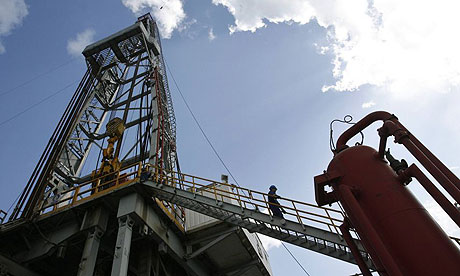
If confirmed, it puts Cuba's reserves on par with those of the US and into the world's top 20. Drilling is expected to start next year by Cuba's state oil company Cubapetroleo, or Cupet.
"It would change their whole equation. The government would have more money and no longer be dependent on foreign oil," said Kirby Jones, founder of the Washington-based US-Cuba Trade Association. "It could join the club of oil exporting nations."
"We have more data. I'm almost certain that if they ask for all the data we have, (their estimate) is going to grow considerably," said Cupet's exploration manager, Rafael Tenreyro Perez.
Havana based its dramatically higher estimate mainly on comparisons with oil output from similar geological structures off the coasts of Mexico and the US. Cuba's undersea geology was "very similar" to Mexico's giant Cantarell oil field in the Bay of Campeche, said Tenreyro.
A consortium of companies led by Spain's Repsol had tested wells and were expected to begin drilling the first production well in mid-2009, and possibly several more later in the year, he said.
Cuba currently produces about 60,000 barrels of oil daily, covering almost half of its needs, and imports the rest from Venezuela in return for Cuban doctors and sports instructors. Even that barter system puts a strain on an impoverished economy in which Cubans earn an average monthly salary of $20.
Subsidised grocery staples, health care and education help make ends meet but an old joke - that the three biggest failings of the revolution are breakfast, lunch and dinner - still does the rounds. Last month hardships were compounded by tropical storms that shredded crops and devastated coastal towns.
"This news about the oil reserves could not have come at a better time for the regime," said Jonathan Benjamin-Alvarado, a Cuba energy specialist at the University of Nebraska.
However there is little prospect of Cuba becoming a communist version of Kuwait. Its oil is more than a mile deep under the ocean and difficult and expensive to extract. The four-decade-old US economic embargo prevents several of Cuba's potential oil partners - notably Brazil, Norway and Spain - from using valuable first-generation technology.
"You're looking at three to five years minimum before any meaningful returns," said Benjamin-Alvarado.
Even so, Cuba is a master at stretching resources. President Raul Castro, who took over from brother Fidel, has promised to deliver improvements to daily life to shore up the legitimacy of the revolution as it approaches its 50th anniversary.
Cuba's unexpected arrival into the big oil league could increase pressure on the next administration to loosen the embargo to let US oil companies participate in the bonanza and reduce US dependency on the middle east, said Jones. "Up until now the embargo did not really impact on us in a substantive, strategic way. Oil is different. It's something we need and want."
Sunday, October 19, 2008
A bubble is building up
Once there was a little island country. The land of this country was the tiny island itself. The total money in circulation was 2 dollars as there were only two pieces of 1 dollar coins circulating around.
- There were 3 citizens living on this island country. A owned the land. B and C each owned 1 dollar.
- B decided to purchase the land from A for 1 dollar. So, now A and C own 1 dollar each while B owned a piece of land that is worth 1 dollar.
The net asset of the country now = 3 dollars.
- 3) Now C thought that since there is only one piece of land in the country, and land is non producible asset, its value must definitely go up. So, he borrowed 1 dollar from A, and together with his own 1 dollar, he bought the land from B for 2 dollars.
- A has a loan to C of 1 dollar, so his net asset is 1 dollar.
- B sold his land and got 2 dollars, so his net asset is 2 dollars.
- C owned the piece of land worth 2 dollars but with his 1 dollar debt to A, his net residual asset is 1 dollar.
Thus, the net asset of the country = 4 dollars.
- A saw that the land he once owned has risen in value. He regretted having sold it. Luckily, he has a 1 dollar loan to C. He then borrowed 2 dollars from B and acquired the land back from C for 3 dollars. The payment is by 2 dollars cash (which he borrowed) and cancellation of the 1 dollar loan to C. As a result, A now owned a piece of land that is worth 3 dollars. But since he owed B 2 dollars, his net asset is 1 dollar.
- B loaned 2 dollars to A. So his net asset is 2 dollars.
- C now has the 2 coins. His net asset is also 2 dollars.
The net asset of the country = 5 dollars. A bubble is building up.
- B saw that the value of land kept rising. He also wanted to own the land. So he bought the land from A for 4 dollars. The payment is by borrowing 2 dollars from C, and cancellation of his 2 dollars loan to A.
- As a result, A has got his debt cleared and he got the 2 coins. His net asset is 2 dollars.
- B owned a piece of land that is worth 4 dollars, but since he has a debt of 2 dollars with C, his net Asset is 2 dollars.
- C loaned 2 dollars to B, so his net asset is 2 dollars.
The net asset of the country = 6 dollars; even though, the country has only one piece of land and 2 Dollars in circulation.
- Everybody has made money and everybody felt happy and prosperous.
- One day an evil wind blew, and an evil thought came to C’s mind. “Hey, what if the land price stop going up, how could B repay my loan. There is only 2 dollars in circulation, and, I think after all the land that B owns is worth at most only 1 dollar, and no more.”
- A also thought the same way.
- Nobody wanted to buy land anymore.
- So, in the end, A owns the 2 dollar coins, his net asset is 2 dollars.
- B owed C 2 dollars and the land he owned which he thought worth 4 dollars is now 1 dollar. So his net asset is only 1 dollar.
- C has a loan of 2 dollars to B. But it is a bad debt. Although his net asset is still 2 dollars, his Heart is palpitating.
- The net asset of the country = 3 dollars again.
- So, who has stolen the 3 dollars from the country ? Of course, before the bubble burst B thought his land was worth 4 dollars. Actually, right before the collapse, the net asset of the country was 6 dollars on paper. B’s net asset is still 2 dollars, his heart is palpitating.
- B had no choice but to declare bankruptcy. C as to relinquish his 2 dollars bad debt to B, but in return he acquired the land which is worth 1 dollar now.
- A owns the 2 coins, his net asset is 2 dollars.
- B is bankrupt, his net asset is 0 dollar. ( he lost everything )
- C got no choice but end up with a land worth only 1 dollar
- The net asset of the country = 3 dollars.
************ **End of the story; BUT ************ ********* ******
There is however a redistribution of wealth.
A is the winner, B is the loser, C is lucky that he is spared.
A few points worth noting -
- When a bubble is building up, the debt of individuals to one another in a country is also building up.
- This story of the island is a closed system whereby there is no other country and hence no foreign debt. The worth of the asset can only be calculated using the island’s own currency. Hence, there is no net loss.
- An over-damped system is assumed when the bubble burst, meaning the land’s value did not go down to below 1 dollar.
- When the bubble burst, the fellow with cash is the winner. The fellows having the land or extending loan to others are the losers. The asset could shrink or in worst case, they go bankrupt.
- If there is another citizen D either holding a dollar or another piece of land but refrains from taking part in the game, he will neither win nor lose. But he will see the value of his money or land go up and down like a see saw.
- When the bubble was in the growing phase, everybody made money.
- If you are smart and know that you are living in a growing bubble, it is worthwhile to borrow money (like A ) and take part in the game. But you must know when you should change everything back to cash.
- As in the case of land, the above phenomenon applies to stocks as well.
- The actual worth of land or stocks depend largely on psychology
Fears regarding US stocks make no sense: Warren Buffett
Legendary investor Warren Buffett has said he is buying American stocks and feels that fears regarding long-term prosperity of country's
many sound companies 'makes no sense'.
In an opinion column written in the New York Times, the billionaire investor said he "cannot predict the short-term movements of the stock market".
"...I've been buying American stocks. This is my personal account I'm talking about, in which I previously owned nothing but United States government bonds," said Chief Executive of Berkshire Hathaway Buffett.
"A simple rule dictates my buying: be fearful when others are greedy, and be greedy when others are fearful. And most certainly, fear is now widespread, gripping even seasoned investors," he pointed out.
According to Buffett, the financial world is in a mess, unemployment would rise in the near term and business activity would falter.
Writing in the New York Times, Buffett said "to be sure, investors are right to be wary of highly leveraged entities or businesses in weak competitive positions".
"But fears regarding the long-term prosperity of the nations many sound companies make no sense. These businesses will indeed suffer earnings hiccups, as they always have. But most major companies will be setting new profit records 5, 10 and 20 years from now," he asserted.
Pointing out that he does not have 'faintest idea' whether stocks would be higher or lower, Buffet noted, "what is likely, however, is that the market will move higher, perhaps substantially so, well before either sentiment or economy turns up." He felt equities would almost certainly outperform cash over the next decade.
many sound companies 'makes no sense'.
In an opinion column written in the New York Times, the billionaire investor said he "cannot predict the short-term movements of the stock market".
"...I've been buying American stocks. This is my personal account I'm talking about, in which I previously owned nothing but United States government bonds," said Chief Executive of Berkshire Hathaway Buffett.
"A simple rule dictates my buying: be fearful when others are greedy, and be greedy when others are fearful. And most certainly, fear is now widespread, gripping even seasoned investors," he pointed out.
According to Buffett, the financial world is in a mess, unemployment would rise in the near term and business activity would falter.
Writing in the New York Times, Buffett said "to be sure, investors are right to be wary of highly leveraged entities or businesses in weak competitive positions".
"But fears regarding the long-term prosperity of the nations many sound companies make no sense. These businesses will indeed suffer earnings hiccups, as they always have. But most major companies will be setting new profit records 5, 10 and 20 years from now," he asserted.
Pointing out that he does not have 'faintest idea' whether stocks would be higher or lower, Buffet noted, "what is likely, however, is that the market will move higher, perhaps substantially so, well before either sentiment or economy turns up." He felt equities would almost certainly outperform cash over the next decade.
Wednesday, October 15, 2008
India cuts cash reserve ratio by 100 bps
India's central bank on Wednesday cut the cash reserve ratio by 100 basis points to 6.5 percent, which it said would release 400 billion rupees ($8.2 billion) into the banking system.
The CRR cut takes effect from the current two-weekly reporting period for banks, which began on Oct. 11, the Reserve Bank of India said in a statement.
Following is the central bank's statement.
---------------------------------------------------------
"The Reserve Bank of India has been continuously monitoring the liquidity and monetary conditions in the recent period. A host of measures have already been taken over the last one month to ensure that there is adequate liquidity in the system.
The Indian interbank unsecured money market has been functioning normally. Average daily volumes in the overnight call money market, at about 140 billion rupees in October 2008 have in fact been somewhat higher than those observed in the previous six month period.
However, the continuing uncertain global situation is having an indirect impact on our financial markets.
On a further review, the RBI has decided to institute the following measures:
(i) The cash reserve ratio (CRR) of scheduled banks is currently at 7.5 per cent of their net demand and time liabilities (NDTL). On a review of the evolving liquidity situation, it has been decided to reduce the CRR by 100 basis points to 6.5 per cent of NDTL with effect from the current reporting fortnight that began on October 11, 2008. This measure will release additional liquidity into the system of the order of 400 billion rupees.
(ii) On Tuesday, October 14, 2008, the RBI decided to conduct a special 14 day Repo at 9 percent per annum for a notified amount of 200 billion rupees with a view to enabling banks to meet the liquidity requirements of mutual funds. 35 billion rupees of this facility was utilised by banks yesterday.
Further, the Reserve Bank announced this morning that this 14 day repo facility will now be conducted every day until further notice up to a cumulative amount of 200 billion rupees for the same purpose. Banks obtain liquidity from the Reserve Bank under the Liquidity Adjustment Facility (LAF) against the collateral of eligible securities that are in excess of their prescribed Statutory Liquidity Ratio (SLR).
It has been decided, purely as a temporary measure, that banks may avail of additional liquidity support exclusively for the purpose of meeting the liquidity requirements of mutual funds to the extent of up to 0.5 percent of their NDTL. This additional liquidity support will terminate 14 days from the closure of this special term repo facility announced on October 14, 2008. This accommodation will be in addition to the temporary measure announced on September 16, 2008 permitting banks to avail of additional liquidity support to the extent of up to 1 percent of their NDTL.
(iii) RBI instituted a mechanism of Special Market Operations (SMO) for public sector oil marketing companies in June-July 2008 taking into account the extraordinary situation then prevailing in the money and forex markets. RBI will institute a similar facility when oil bonds become available.
(iv) Under the Agricultural Debt Waiver and Debt Relief Scheme Government had agreed to provide to commercial banks, regional rural banks and co-operative credit institutions a sum of 250 billion rupees as the first instalment. At the request of the Government, RBI has agreed to provide the sum to the lending institutions immediately. This liquidity support will be provided by the Reserve Bank of India under Section 17(3b) and Section 17(4E) of RBI Act to scheduled banks and NABARD respectively.
(v) Interest Rates on NRI Deposits
(a) Interest Rates on FCNR (B) Deposits
Currently, the interest rate ceiling on FCNR(B) deposits of all maturities has been fixed at Libor/Euribor/Swap rates for the corresponding maturities minus 25 basis points for the respective foreign currencies.
In view of the prevailing market conditions, it has been decided:
to increase, with immediate effect, the interest rate ceiling on FCNR (B) deposits by 50 basis points, i.e., to Libor/Euribor/Swap rates plus 25 basis points.
(b) Interest Rate on NR(E) RA Deposits
Currently, the interest rate ceiling on NR(E) RA for one to three years maturity should not exceed the Libor/Euribor/Swap rates plus 50 basis points for US dollar of corresponding maturity.
In view of the prevailing market conditions, it has been decided:
to increase, with immediate effect, the interest rate ceiling on NR(E)RA deposits by 50 basis points, i.e., to Libor/Euribor/Swap rates plus 100 basis points.
(vi) Banks will be allowed to borrow funds from their overseas branches and correspondent banks up to a limit of 50 per cent of their unimpaired Tier I capital as at the close of the previous quarter or $10 million, whichever is higher, as against the existing limit of 25 per cent.
The above measures will be reviewed on a continuous basis in the light of the evolving liquidity conditions.
The Reserve Bank is monitoring developments in the financial markets closely and continuously and would respond swiftly and even pre-emptively to any adverse external developments impinging on domestic financial stability, price stability and inflation expectations.
The Reserve Bank is committed to maintaining financial stability and active, and flexible liquidity management using all policy instruments is an integral part of this objective. ($1=48.5 rupees)
Subscribe to:
Posts (Atom)